Parkinson’s disease tends to move slowly enough that families adapt without fully realizing how much has changed. The tremor that was barely noticeable two years ago is more pronounced now. Getting out of the car takes longer. Meals have gotten messier and slower. These are not dramatic changes — they are incremental ones, which makes them easy to absorb one at a time without stepping back to see the full picture.
Until something changes quickly. A fall. A hospitalization. A swallowing episode. And suddenly the family is scrambling to build support structures they should have been putting in place months earlier. Here is what to know about managing Parkinson’s well at home — and how to get ahead of the progression instead of reacting to it.
The Daily Risks That Require Active Management
Falls Are the Most Immediate Danger
Parkinson’s affects gait, balance, and the ability to react quickly to a loss of stability. Freezing episodes — where the feet seem to stick to the ground — can happen without warning during a turn, a doorway crossing, or a simple change in direction. These are not just inconvenient. They are the leading cause of serious injury in people with Parkinson’s.
Medication Timing Is Not Flexible
Levodopa and other Parkinson’s medications have a specific therapeutic window that is narrower than most other medications. Taking them an hour late can produce significant motor deterioration. Our caregivers are trained to understand this and ensure medication timing is treated as a clinical priority, not a suggestion.
Swallowing Changes Before They Become Obvious
Dysphagia — difficulty swallowing — develops gradually in most people with Parkinson’s and frequently goes unnoticed until there is a choking episode or a pneumonia diagnosis. Mealtime supervision, appropriate food textures, and upright positioning are not precautions for late-stage Parkinson’s. They are appropriate from the middle stage onward.
What Good Daily Support Looks Like
Mobility Assistance That Respects the Disease
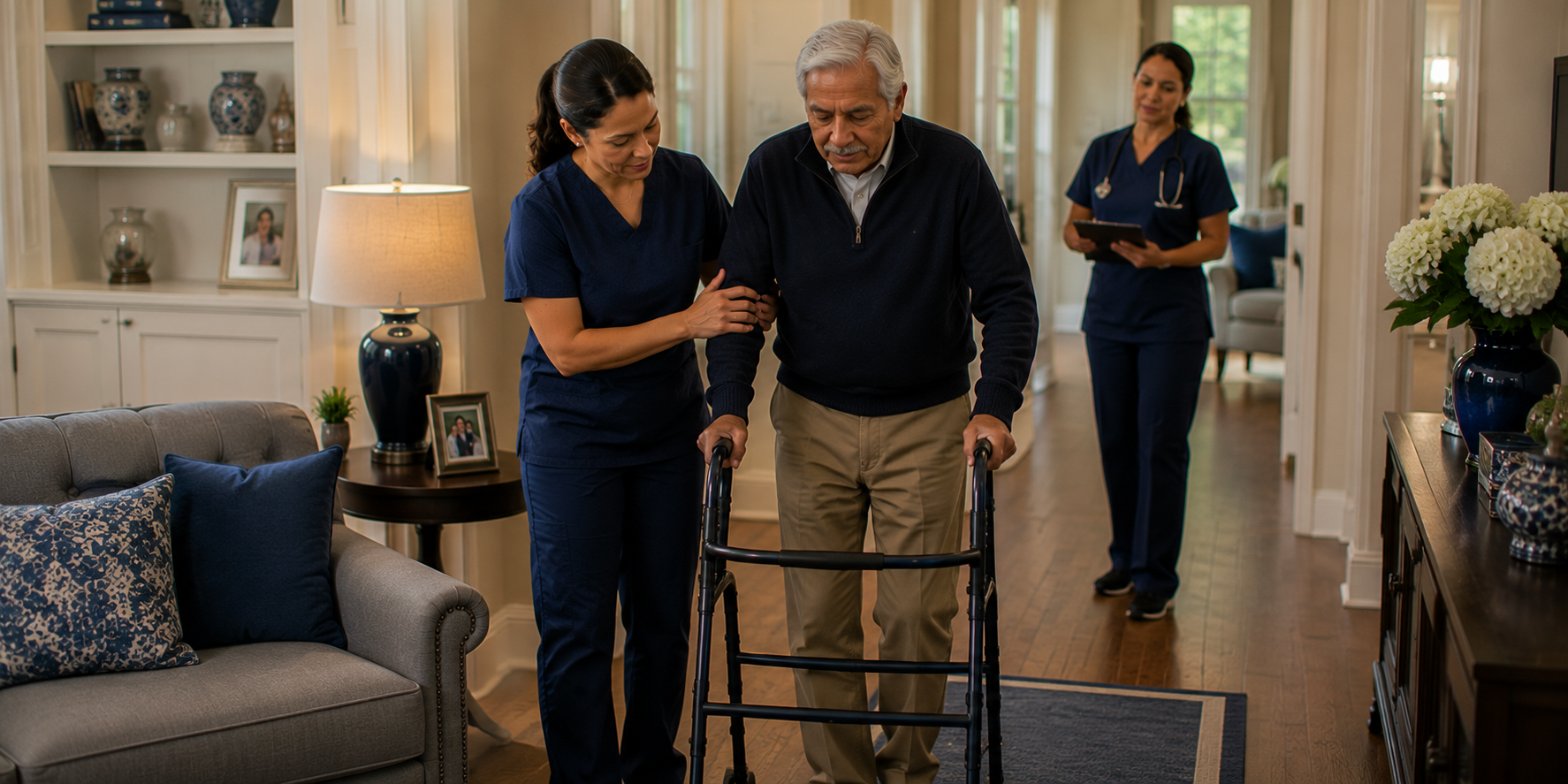
Rushing someone with Parkinson’s — through a doorway, through a meal, through getting dressed — makes everything more dangerous. Our caregivers are trained in Parkinson’s-specific transfer and mobility techniques that work with the disease rather than against it.
Consistent Structure Reduces Symptom Severity
Predictable daily routines, consistent mealtimes, scheduled medication administration, and structured rest periods all contribute to better symptom management in Parkinson’s. Unpredictability and stress are genuine symptom triggers — consistency is genuinely therapeutic.
The Role of Nursing Oversight in Parkinson’s Care
Tracking the Progression Clinically
An RN who is consistently reviewing a Parkinson’s client’s status can identify when the disease is advancing in ways that require a care plan adjustment — or a conversation with the neurologist — before a crisis makes it obvious.
Identifying Medication-Related Changes
Parkinson’s medications have real side effects and their effectiveness changes over time. A nurse reviewing the clinical picture can distinguish between disease progression and medication-related changes — a distinction that matters for treatment and care.
Getting Ahead of Parkinson’s Is the Strategy That Works
The families managing Parkinson’s well at home are almost always the ones who built clinical support earlier rather than later. Not because the early stages are unmanageable — but because building the team, establishing the routines, and getting nursing oversight in place before the situation becomes urgent is dramatically easier than doing it in response to a crisis.
At Consistent Solution Nursing, we have cared for clients with Parkinson’s at every stage of the disease. If you are trying to figure out what support makes sense right now, call us.