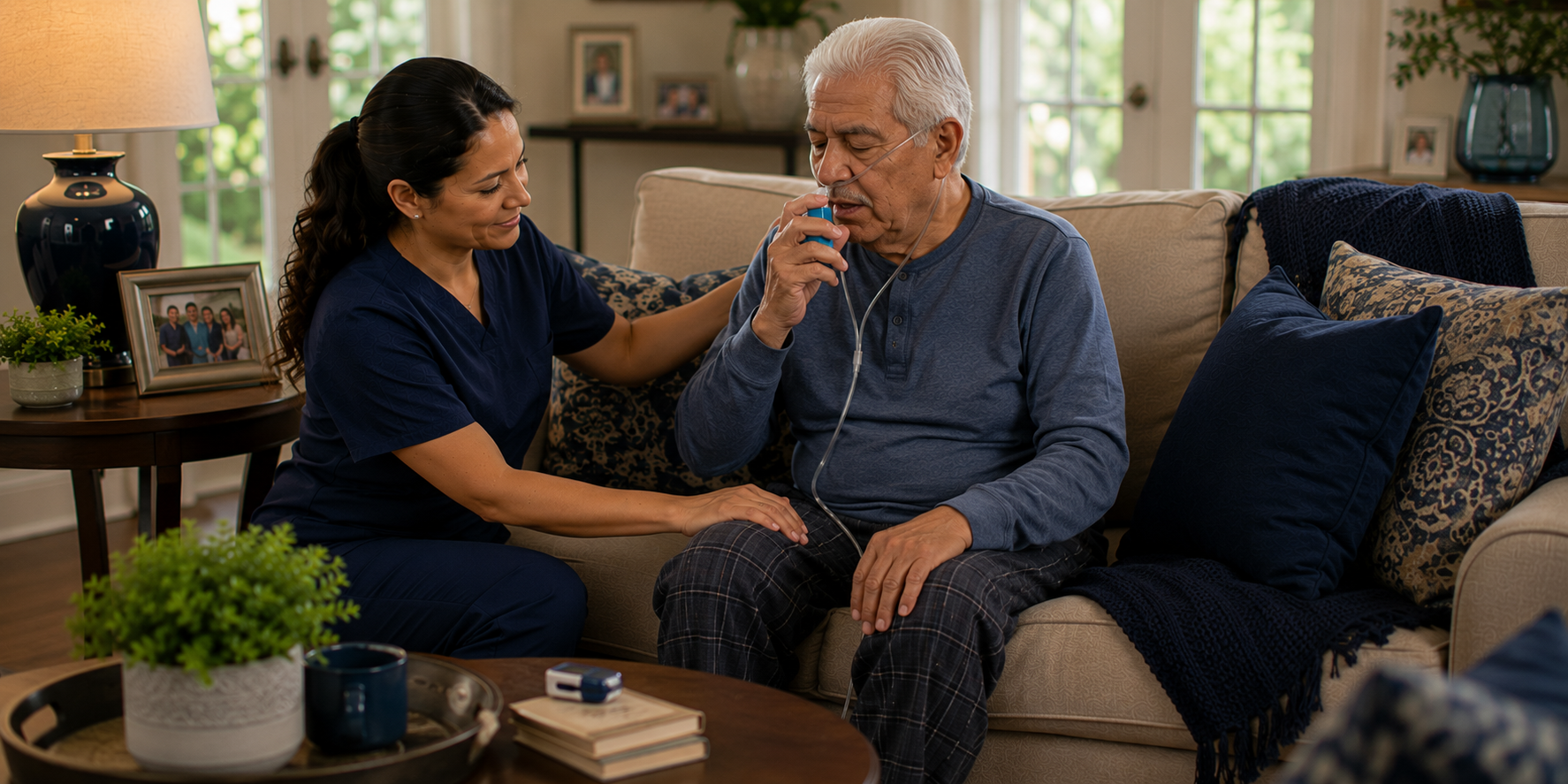
Your mother has COPD. You have been managing it at home — inhalers, oxygen when needed, trying to keep the house clean and free of irritants. And for stretches of time, it works. She is stable. She is managing. And then something shifts — a cold, a change in the weather, a stressful week — and she is back in the emergency room.
For families managing COPD at home, this cycle of exacerbations and hospitalizations can feel inevitable. It is not. The exacerbations that lead to emergency room visits almost always begin with days of subtle early changes that, caught early and managed appropriately, can be addressed at home without a hospitalization. Here is what those changes look like and what good COPD management at home actually requires.
The Early Warning Signs Most Families Miss
Increased Breathlessness Beyond Their Baseline
Every person with COPD has a baseline — a level of breathlessness that is their normal. What matters clinically is change from that baseline, not the absolute level. A person who is always somewhat short of breath needs someone who knows their baseline well enough to recognize when it has shifted.
Changes in Sputum
A change in the color, consistency, or volume of sputum is often the earliest sign of a respiratory infection — the most common trigger for COPD exacerbations. Families who monitor for this and communicate it to the physician early prevent the majority of serious exacerbations.
Increased Anxiety or Restlessness
Before breathlessness becomes severe enough to be obvious, many people with COPD become more anxious or restless — a physiological response to early hypoxia that is often interpreted as a mood or behavioral issue rather than a respiratory one.
What Daily COPD Management Requires
Medication Adherence and Correct Inhaler Technique
The most common reason COPD medications fail is not that they do not work — it is that they are not being used correctly. Inhaler technique requires instruction and regular assessment. Our caregivers are trained to support correct technique and consistent medication timing.
Activity Paced to Respiratory Tolerance
Regular, appropriately paced physical activity is genuinely therapeutic in COPD — it maintains exercise tolerance and reduces the severity of the disease over time. But activity must be carefully matched to the person’s current respiratory capacity, and that capacity changes.
Environmental Control
Cigarette smoke, dust, chemical cleaning products, strong perfumes, and cold dry air are all COPD triggers that can be managed in the home environment. A trained caregiver maintains a consistent, trigger-reduced environment as part of the daily care routine.
When Early Communication Prevents Hospitalization
The Physician Needs to Hear About Changes Early
A phone call to the physician about a subtle change in breathlessness and sputum color two days into a developing exacerbation leads to a medication adjustment. Waiting until the exacerbation is severe enough that the family knows something is wrong leads to an emergency room visit. The difference is timing.
An RN Can Make That Call Clinically
A family member can report that Mom seems worse. A nurse can tell the physician what she is observing clinically, why it matters, and what she thinks should happen. That difference in communication quality leads to a different quality of response.
COPD Is Manageable — When Someone Is Consistently Watching
At Consistent Solution Nursing, we have helped families break the COPD hospitalization cycle. Consistent daily observation, nursing oversight, and proactive clinical communication with physicians is how we do it. If your loved one has COPD and keeps ending up in the emergency room, call us. There is a better way to manage this.