A stroke changes everything in a moment. Your father was talking to you on the phone on a Tuesday afternoon. By Tuesday evening, he was in the ICU. By the end of the week, he was in a rehabilitation facility, working with therapists, relearning the things the stroke took from him. And now he is coming home — and the house that felt completely ordinary two weeks ago suddenly feels full of things you had not noticed before.
Stroke recovery at home is one of the most complex caregiving situations families face. The hospital managed the acute event. The rehab facility addressed the immediate functional deficits. What comes next — the weeks and months of recovery at home — is where families are largely on their own, figuring out what they need as they go. Here is what to know before you get there.
The Physical Realities of Stroke Recovery at Home
One-Sided Weakness Changes Everything
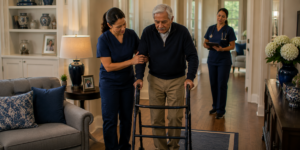
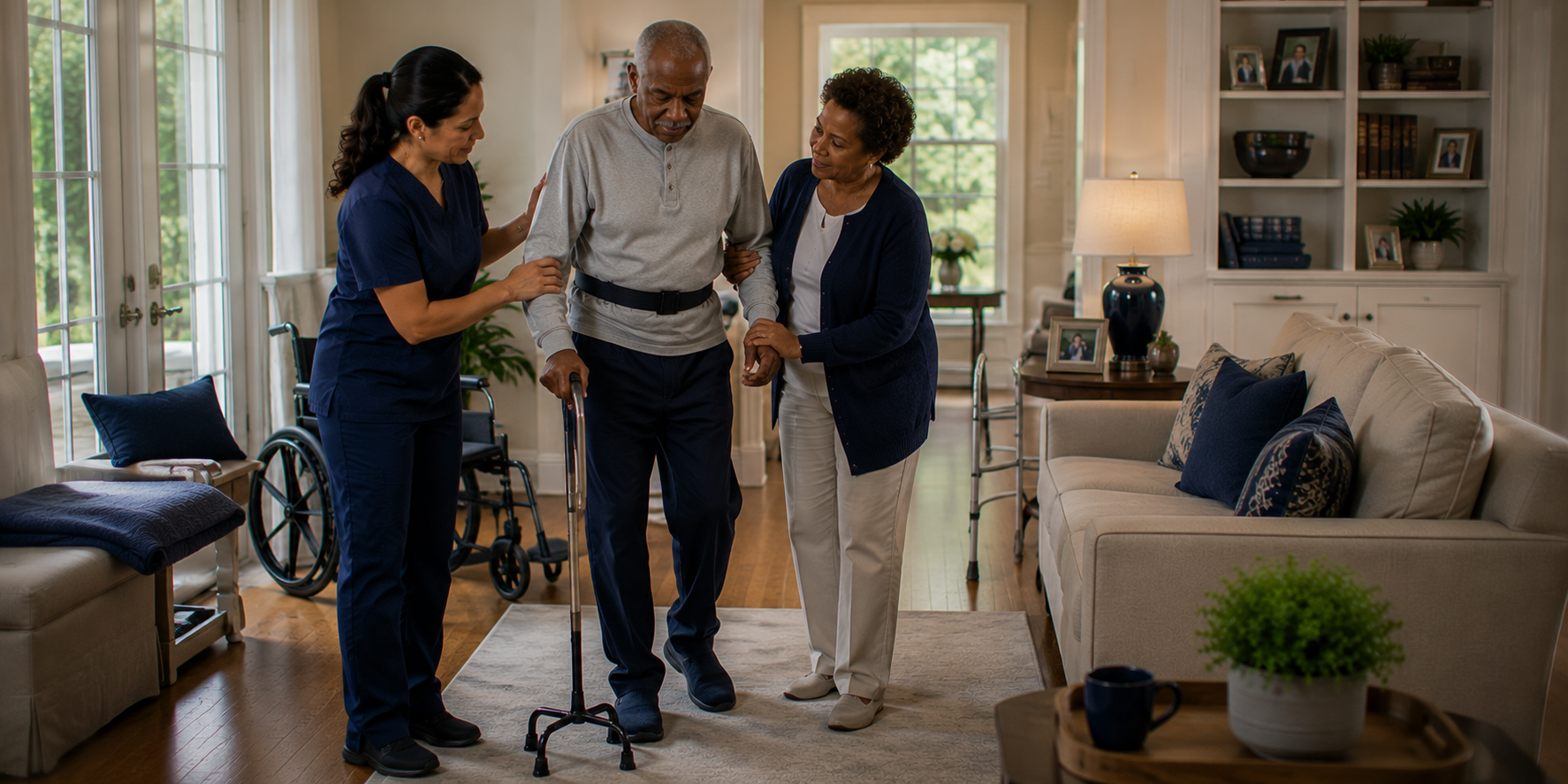
Hemiplegia or hemiparesis — weakness or paralysis on one side of the body — affects how a person transfers from bed to chair, how they walk, how they dress themselves, and how they navigate every space in the home. Assisting someone with one-sided weakness safely requires specific training and technique. Done incorrectly, it is a fall risk for both the person and the caregiver.
Swallowing May Not Be Safe
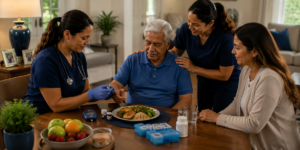
Post-stroke dysphagia — difficulty swallowing — affects a significant percentage of stroke survivors and is one of the leading causes of aspiration pneumonia and rehospitalization. Mealtime is a clinical event after a stroke, not just a daily routine, and it needs to be managed as one from the first day home.
Fatigue Is Real and Requires Pacing
Neurological fatigue after a stroke is different from ordinary tiredness. It is profound, it is clinical, and it does not respond to pushing through. Recovery activities, therapy exercises, and daily tasks need to be structured around realistic energy levels — not optimistic ones.
The Cognitive and Emotional Changes Families Often Underestimate
Post-Stroke Depression Is Extremely Common
Depression following a stroke affects a majority of survivors and is chronically undertreated because it gets attributed to the normal grief of a significant health event. It is a neurological consequence of the stroke, it responds to treatment, and it needs to be identified and addressed — not waited out.
Cognitive Changes May Not Have Been Obvious During Rehabilitation
The controlled, structured environment of a rehab facility can mask cognitive deficits that become apparent when someone returns to the complexity and demands of daily life. Problems with memory, attention, word-finding, or judgment often become visible at home that were not visible in rehab.
How to Build the Right Support
Start Before Discharge if Possible
A clinical assessment of the home environment before your loved one returns — combined with caregiver support starting on day one — prevents the most common and most serious post-discharge complications.
Physical Recovery Requires Daily Support
Therapy appointments are important. But recovery happens in the hours between therapy sessions — in daily movement, in the routines that build strength and relearn function. A caregiver present for those hours supports the recovery in ways that appointment-based care cannot.
Stroke Recovery Is Possible at Home — With the Right Team
We have supported families through stroke recovery at every level of severity. Our caregivers are trained in post-stroke mobility assistance and clinical observation. Our RNs track the recovery, communicate with the medical team, and adjust the care plan as your loved one improves.
At Consistent Solution Nursing, we serve families throughout Greater Boston. If your loved one is recovering from a stroke, call us. We can help you build the team that makes recovery at home not just possible — but successful.