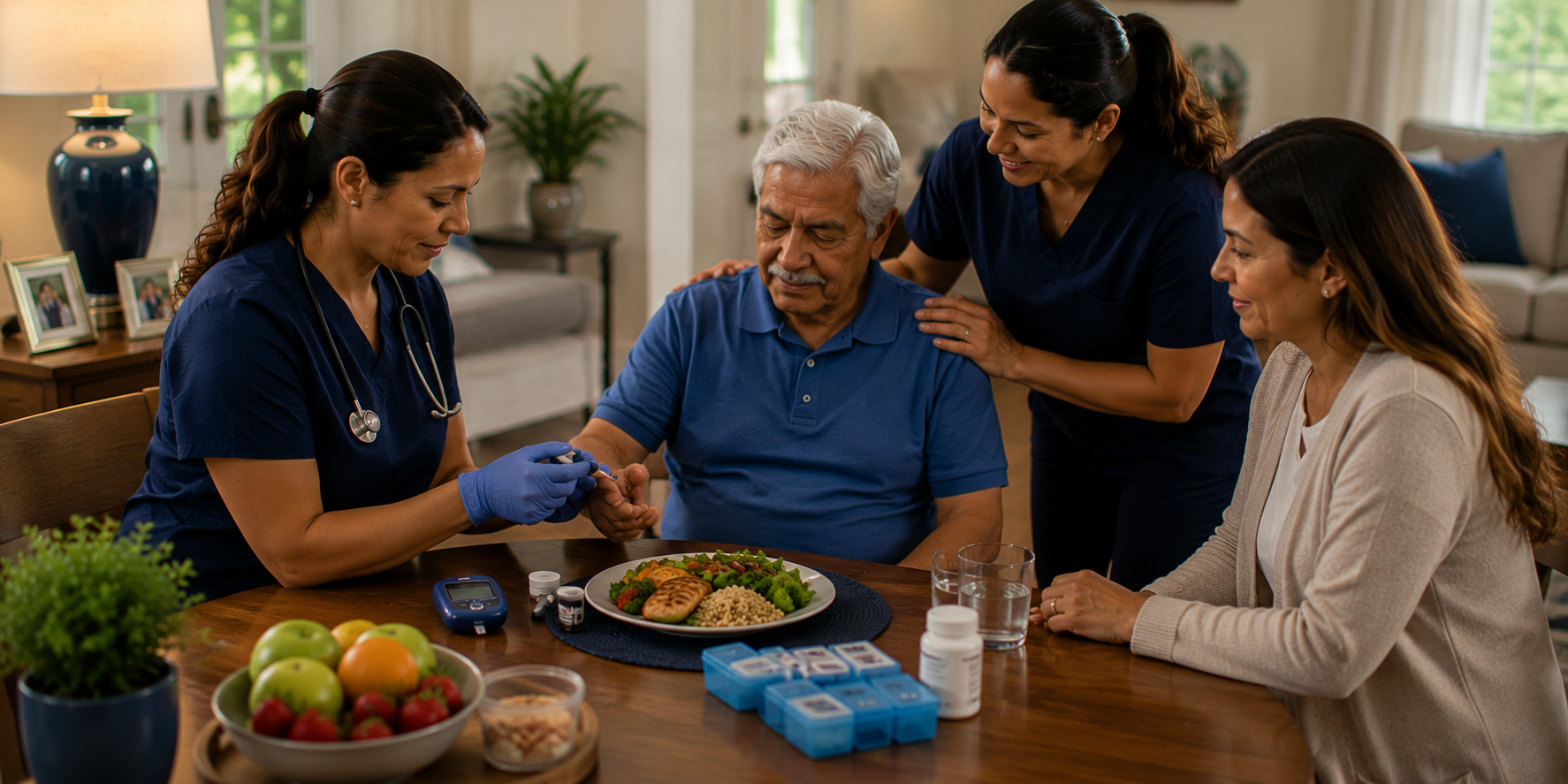
Diabetes management looks manageable from the outside. Take the medications, watch what you eat, check blood sugar. For a 45-year-old with one condition and a clear daily routine, it is manageable. For an 80-year-old with diabetes alongside heart disease, kidney disease, and early cognitive decline, who lives alone and is not always sure what day it is — it is a different situation entirely.
The daily details of diabetes management in older adults matter more than most families realize. Not because diabetes is uniquely dangerous, but because the consequences of mismanagement compound quickly in someone with multiple conditions and limited physiological reserve. Here is what good daily diabetes management at home actually looks like.
The Daily Risks That Require Consistent Attention
Hypoglycemia Looks Different in Older Adults
The classic signs of low blood sugar — shakiness, sweat, hunger — are often absent or muted in older adults. What presents instead is sudden confusion, irritability, unusual fatigue, or a change in behavior that families attribute to dementia or mood. An unrecognized hypoglycemic episode is a fall waiting to happen, and a pattern of unrecognized episodes is a clinical emergency.
Foot and Skin Care Is Non-Negotiable
Diabetic neuropathy reduces sensation in the feet and lower legs. Wounds that would be immediately noticed by a healthy person go undetected — and undetected diabetic wounds can progress to serious infections or worse within days. Daily foot inspection by a trained caregiver is not optional for a diabetic client. It is part of the care plan.
Meal Timing and Composition Directly Affect Stability
Skipping meals, eating at irregular times, or consuming foods that cause significant blood sugar swings creates clinical instability that compounds over days and weeks. A diabetic client needs meals at consistent times, with consistent nutritional content — and a caregiver who understands why.
How Medication Management Fits In
Insulin and Oral Medications Require Consistent Timing
The therapeutic benefit of most diabetes medications depends on taking them at consistent times in relationship to meals. A medication reminder system that actually works — not a sticky note on the refrigerator — is essential.
Medication Changes Require Extra Vigilance
Whenever a diabetes medication is adjusted — dose, timing, or type — the period immediately following that change is high-risk. Blood sugar can shift significantly in either direction, and the clinical response needs to be attentive.
The Role of RN Oversight in Diabetes Management
Connecting Daily Observations to Clinical Patterns
A single abnormal reading may be insignificant. A week of abnormal readings, combined with behavioral observations from a caregiver, is a clinical pattern that the physician needs to see. Our RNs provide exactly this connection between daily observation and clinical management.
Coordinating With the Medical Team on Changes
When our clinical observations suggest a medication adjustment or a physician conversation is warranted, our nurses facilitate that communication. This is how clinical changes are caught at home rather than in an emergency room.
Diabetes Management Is a Daily Clinical Discipline
At Consistent Solution Nursing, we treat diabetes management as exactly that — a clinical discipline built into the daily routine. Our caregivers provide the consistent daily attention. Our RNs provide the clinical oversight. Together, we keep the small daily details from compounding into the emergencies that send people to the hospital.