Your father used to be the person who had somewhere to be every day. Coffee with the guys on Tuesday mornings. The hardware store on Saturdays. Church on Sundays. A neighbor who would stop by. And now you call on a Tuesday and he has not left the house in four days. He says he is fine. He is watching a lot of television.
Loneliness and social isolation in older adults is one of the most significant and least-addressed health risks in our healthcare system. It is not a feeling to be managed — it is a clinical condition with measurable health consequences. And it is far more common than most families realize.
What Loneliness Actually Does to Health
It Accelerates Cognitive Decline
The research on this is consistent: socially isolated older adults experience significantly faster cognitive deterioration than those with regular meaningful social contact. Social engagement is cognitively demanding in the best possible way — it exercises the brain in ways that passive activities like television do not.
It Affects Physical Health Directly
Chronic loneliness is associated with higher blood pressure, weakened immune function, increased inflammation, and disrupted sleep. These are not abstract correlations — they are physiological mechanisms that translate into hospitalizations, falls, and earlier mortality.
It Worsens Depression and Anxiety
Depression is chronically underdiagnosed in older adults, and isolation is one of its strongest drivers. A parent who has become more withdrawn, less interested in things they used to enjoy, or who seems emotionally flat may be experiencing depression — not just ‘slowing down.’
Why It Happens Gradually and Goes Unnoticed
The Social World Contracts Slowly
Driving becomes difficult. Friends pass away or move. Physical limitations make social activities harder. The commute to places that mattered becomes too much. Each loss is manageable in isolation — but the cumulative effect is a dramatically reduced social world that the older adult may not fully recognize or articulate.
‘I’m Fine’ Is Often Not the Full Truth
Older adults are remarkably reluctant to report loneliness. There is stigma attached to it, and many have internalized an ethic of self-sufficiency that makes asking for connection feel like weakness. The absence of complaint is not evidence of the absence of need.
What Genuine Companionship in Home Care Looks Like
Real Conversation and Engagement — Not Just Presence
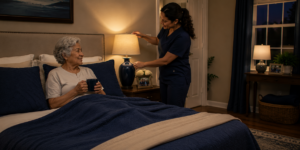
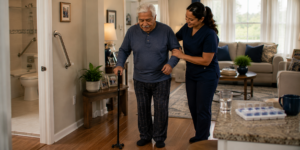
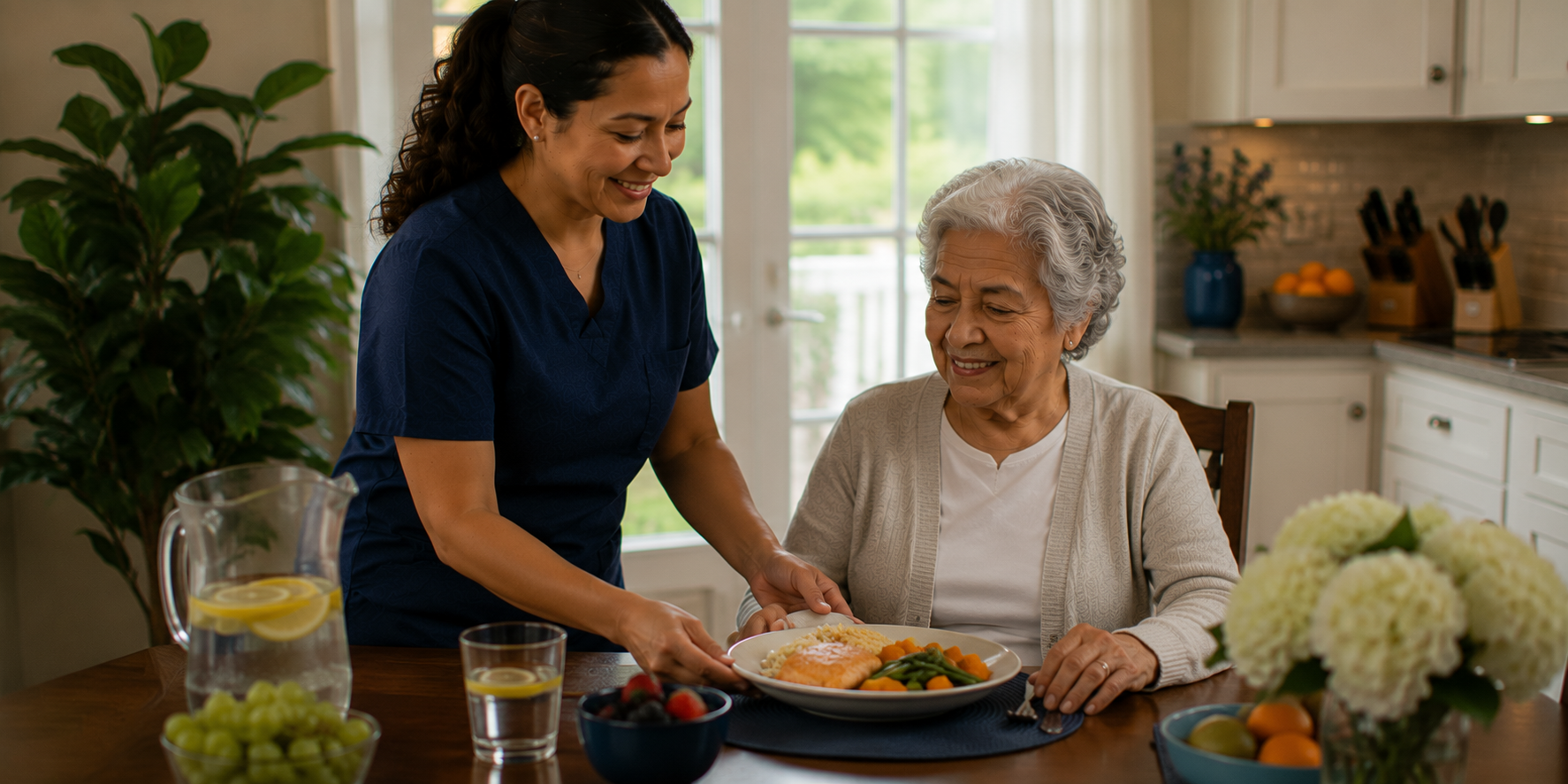
A caregiver sitting quietly in the corner is not companionship. The caregivers we match with clients are there for conversation, for shared activities, for walks, for engagement with what this specific person cares about. We consider personality and interests in every match we make.
Structure That Creates Anticipation and Purpose
When a client knows that Maria comes on Tuesdays and they always do the crossword together, or that James takes them for a walk on Thursday mornings — those anchors create anticipation, routine, and the sense that the day has something worth showing up for.
Connection Is Medicine — and Good Home Care Provides It
At Consistent Solution Nursing, companionship is not a side service — it is a clinical priority. We match caregivers with personality and shared interests in mind, because a genuine human relationship has therapeutic value that task completion alone will never provide.
If your loved one has been spending too much time alone, call us. The right person in their home, on a consistent schedule, can change the entire quality of their daily life.