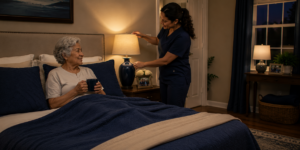
Aging in place — the idea of remaining in your own home as you grow older, rather than moving to a facility — is what the vast majority of older adults want. When you ask people where they want to be as they age, the answer is almost always home. The home they know. The neighborhood they have lived in. The rooms full of the things that make up a life.
Making that happen safely and sustainably is where the complexity lies. Aging in place is not a passive condition — it does not just happen because no one has moved someone to a facility yet. It requires active support, thoughtful clinical oversight, and a plan that evolves as needs change. Here is what it actually takes.
The Physical Requirements
A Home That Is Safe for the Person Living in It Now
The home that was perfectly safe at 70 may have real hazards at 82. Stairs that were manageable before a hip replacement may not be manageable after. Grab bars that were unnecessary two years ago may be essential now. The home needs to be reassessed regularly — not just once, when care begins.
Help With Daily Activities That Are Becoming Difficult
The point at which daily activities — bathing, meal preparation, medication management, housekeeping — are becoming difficult but not yet impossible is exactly the right time to build in support. Waiting until they are impossible means waiting until something has gone wrong.
Daily Monitoring of Health Status
Aging in place with multiple chronic conditions requires someone paying attention to the daily clinical picture — weight trends in heart failure, blood sugar patterns in diabetes, respiratory status in COPD. This monitoring is what keeps chronic conditions from becoming hospitalizations.
The Social and Cognitive Requirements
Meaningful Daily Human Connection
Aging in place can become aging in isolation when the social connections that used to exist — driving to see friends, attending church, engaging in community — gradually become inaccessible. Isolation accelerates cognitive decline and depression. It is a health issue, not just a quality of life one.
Cognitive Safety Monitoring
For someone with any degree of cognitive impairment, aging in place requires someone assessing — consistently, over time — whether they can manage the decisions and tasks that living independently requires. Stove safety, medication management, financial decision-making: these need clinical eyes, not just family check-ins.
The Clinical Requirements That Get Overlooked
Nursing Oversight as the Clinical Anchor
Aging in place with complex medical needs works when a nurse is actively involved in managing those needs over time. Not assessing once and stepping back — actively involved in the ongoing clinical picture, coordinating with physicians, adjusting care as conditions change.
A Plan That Evolves as Needs Do
The support that worked six months ago may be insufficient today. A care plan that is not regularly reviewed and updated is not a plan — it is a snapshot of a moment that no longer exists. Regular clinical reassessment is what keeps aging in place working as needs increase.
Aging in Place Is a Goal Worth Planning For
At Consistent Solution Nursing, helping people stay home safely — for as long as possible, with as much independence as possible, supported by real clinical oversight — is exactly what we are built to do. We serve families throughout Greater Boston.
If aging in place is the goal for your loved one, call us. We will help you build the support structure that makes it a real, sustainable option.