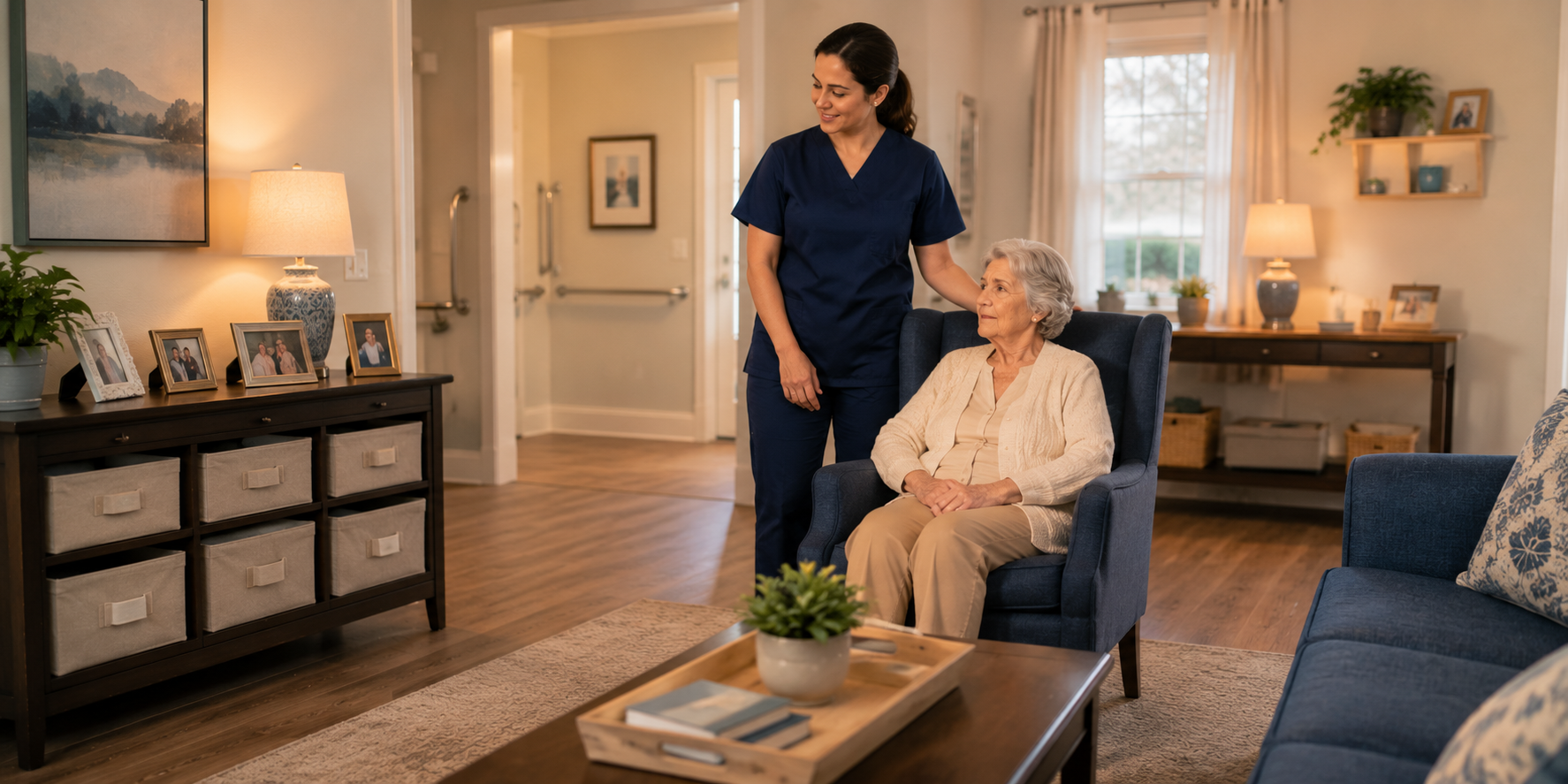
Walk through your parent’s home and try to see it the way their brain does right now. Not the home you grew up in, not the space you helped them organize — but the environment as it appears to a mind that is gradually losing the ability to make sense of the world around it.
That shift in perspective is where dementia-friendly home design begins. It is not about renovation. It is about removing what confuses, securing what can harm, and preserving what feels familiar. Most of the changes that matter most cost very little — they just require knowing what to look for.
Simplify and Organize the Living Space
Remove the Visual Noise
Clutter is confusing for a dementia brain. Surfaces covered with objects, drawers that are hard to navigate, rooms that feel crowded — all of it increases disorientation and agitation. Clear the space. Keep what is meaningful and familiar, remove what is unnecessary.
Label What Matters
Put clear labels on cabinet doors, drawers, and rooms. The bathroom, the bedroom, where the glasses are kept. Your loved one should never have to search or ask for the things they need most often. Labels restore a small but meaningful layer of independence.
Keep Furniture Arrangements Consistent
Rearranging furniture — even with good intentions — is deeply disorienting for someone with dementia. The mental map they rely on is fixed. Changes to that map create confusion and increase fall risk. Once a layout works, leave it alone.
Enhance Safety Throughout the Home
The Bathroom First
This is where most falls happen. Install grab bars beside the toilet and inside the shower. Add a nonslip mat on the floor and a shower chair inside the stall. Make sure the hot water temperature is set low enough that they cannot scald themselves if they lose track of what they are doing.
Secure What Can Cause Harm
Medications, cleaning products, sharp objects, stove knobs — any of these can be accessed impulsively by someone who no longer has reliable judgment. Locks, stove covers, and medication organizers controlled by the caregiver are not overprotective. They are appropriate.
Light Every Path
Poor lighting is one of the most underestimated hazards in dementia care. Install nightlights on the path between the bedroom and bathroom. Make sure light switches are easy to find and reachable. Reduce the difference between well-lit and dark areas of the home wherever possible.
Create a Calming, Familiar Environment
Anchor With the Familiar
Photographs, meaningful objects, a favorite chair in its usual spot — these are not just comforting, they are orienting. They communicate this is your home, this is your life. Do not replace familiar objects with new ones, even if the new ones seem nicer.
Designate a Quiet Space
Choose one area of the home that is consistently calm, low in stimulation, and available when your loved one feels overwhelmed. This space becomes a reliable refuge during hard moments — and having it ready matters more than most families realize until they need it.
A Safe Home Is the Foundation — But It Is Only the Beginning
The right environment reduces confusion and prevents accidents. But it cannot replace the consistent, trained human presence that makes real dementia care work. The caregiver who knows your loved one’s patterns, who responds calmly when things get hard, who is there when you cannot be — that is what changes the daily experience for everyone.
At Consistent Solution Nursing, we begin every client relationship with a clinical home walkthrough. Our RNs assess the environment alongside the person’s current condition and build a care plan that addresses both. We serve families throughout Greater Boston — and we are glad to walk through your loved one’s home with you.