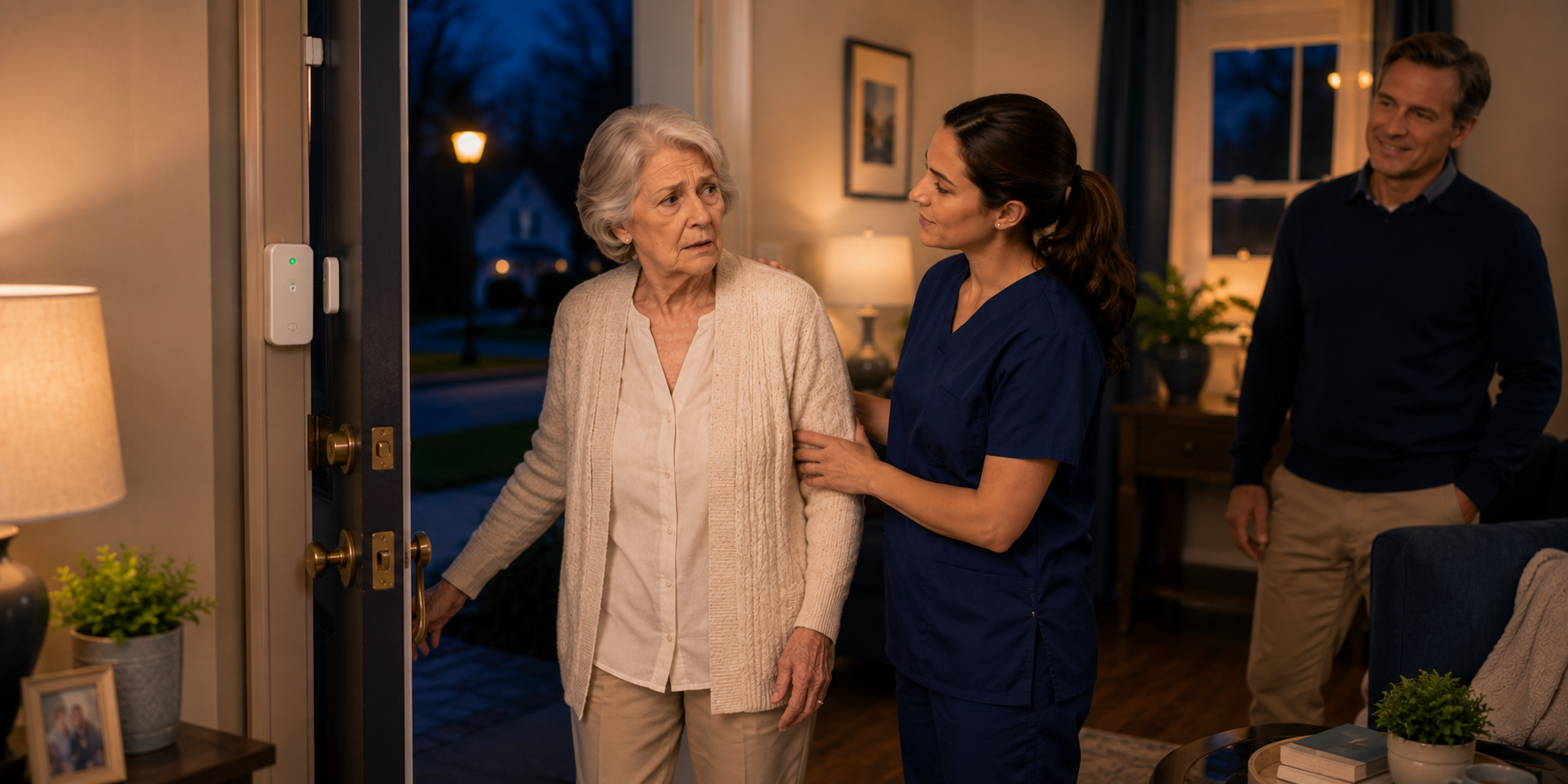
It is 2 in the morning. You wake up to use the bathroom and notice the bedroom door is open. You check the next room — empty. You check the next. Empty. You go downstairs and the front door is unlocked. Your father is gone.
Wandering is one of the most frightening experiences in dementia caregiving. It happens to roughly 60 percent of people with dementia at some point during the disease. Understanding why it happens is the first step to preventing it — and putting the right safeguards in place before an episode occurs is far better than responding to one.
Why People With Dementia Wander
They Are Looking for Something
Wandering is almost never random. Your loved one is almost always going somewhere in their mind — to work, to pick up children, to a home from decades ago. The destination is real to them. The impulse to get there is urgent. They are not lost — they are trying to get somewhere that no longer exists in the form they remember.
They Are Responding to Discomfort
Hunger, pain, needing the bathroom, feeling too hot or too cold — any physical discomfort can translate into restlessness and the urge to move when someone cannot articulate what they need. Before assuming a behavioral cause, rule out a physical one.
The Brain Has Lost Its Anchor to Now
The dementia brain can slip between time periods without warning. A person who wakes up in the night may genuinely believe they are waking up in a different decade, in a different home, with different obligations. Their movement makes complete sense from inside that experience.
How to Reduce the Risk
Secure the Exits Without Creating a Prison
Door alarms, door handle covers, and deadbolts placed higher or lower than typical eye level can all deter wandering without making the home feel like a locked facility. The goal is to add enough friction to give you time to respond — not to make your loved one feel trapped.
Maintain a Consistent Daily Routine
Wandering is significantly more common in people whose daily routines are unpredictable. Regular mealtimes, activity schedules, and sleep routines reduce the internal restlessness that fuels wandering. Structure is protective.
Make Sure They Are Registered
The Alzheimer’s Association’s MedicAlert Safe Return program and local police department Safe Return registries exist specifically for this situation. Register your loved one now — before you need it. If they do wander, this is what brings them home.
Address the Underlying Need
If wandering tends to happen at a particular time of day, look for a pattern. Pre-dinner restlessness often responds to a walk or structured activity earlier in the afternoon. Nighttime wandering often improves with better daytime activity and consistent sleep hygiene. The behavior is communication — try to hear what it is saying.
Overnight Wandering Requires a Different Level of Support
One Person Cannot Be Awake 24 Hours
Families managing nighttime wandering are often doing so on no sleep, indefinitely. That is not sustainable — and an exhausted caregiver is a less safe caregiver. If wandering is happening at night, the solution is not more vigilance from you. It is the right professional support.
Overnight Caregivers Change Everything
A trained overnight caregiver who knows your loved one’s patterns, who can redirect calmly when they get up, and who can keep them safe until morning is not a luxury at this stage. It is what makes staying at home possible.
Wandering Is Manageable — With the Right Plan in Place
The families we work with who are managing wandering well have one thing in common: they built a plan before a crisis forced one. Secure exits, a consistent routine, professional caregiver support during the highest-risk hours, and an emergency registration on file.
At Consistent Solution Nursing, our caregivers are trained specifically in wandering prevention and response. We work with families throughout Greater Boston to build the structure and overnight support that keeps loved ones safe at home — without the family losing sleep every night worrying about what might happen.