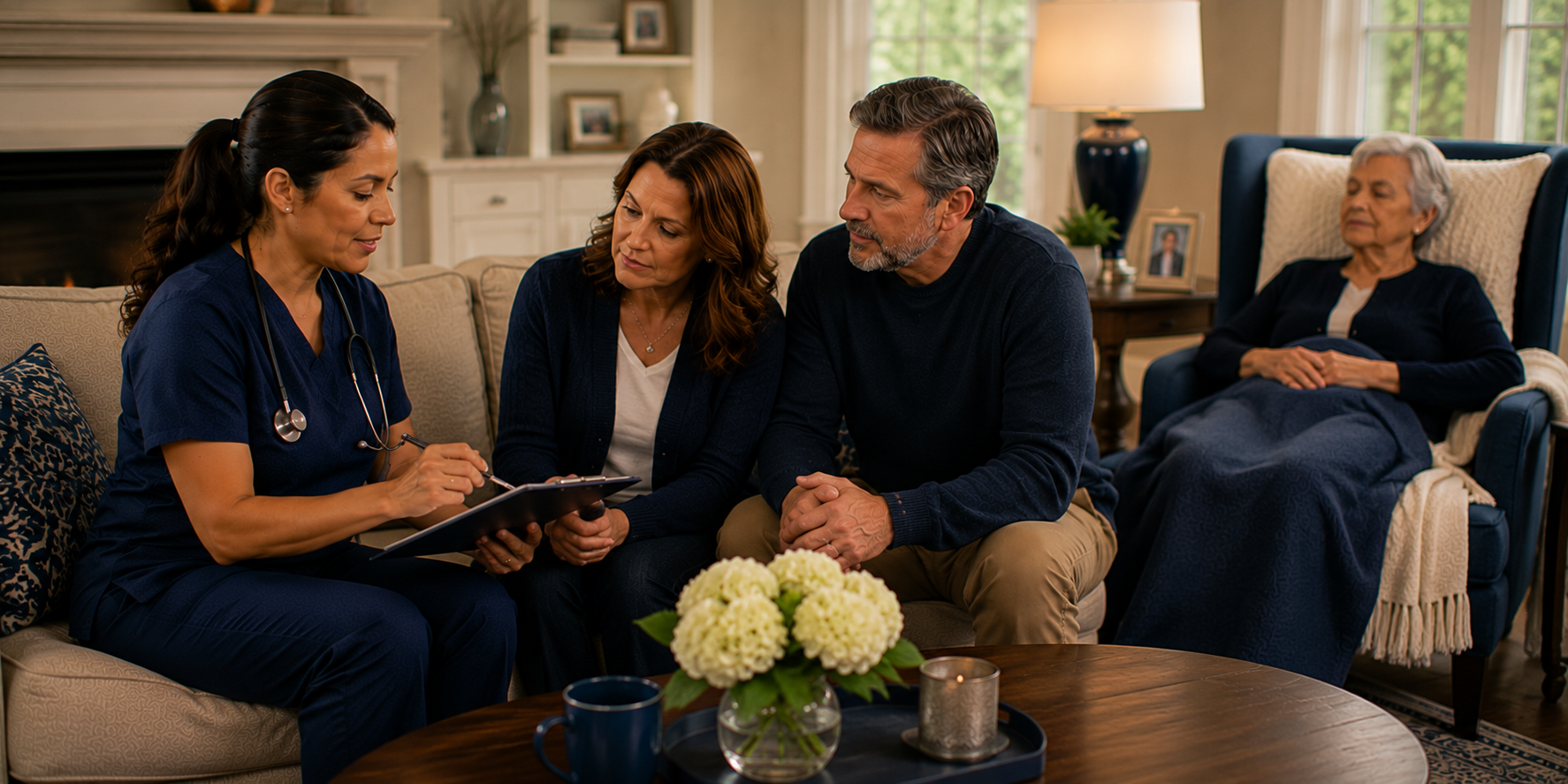
Two families. Two homecare agencies. On the surface, the arrangements look similar — a caregiver comes to the home each morning, helps with bathing and breakfast, manages medications, and provides companionship through the day. But one family has RN oversight built into their arrangement. The other does not. And the difference between those two situations is far larger than it appears.
Nursing oversight is not paperwork. It is not a clinical credential displayed on a website. It is an active, ongoing clinical presence in a loved one’s care — and it changes outcomes in ways that matter enormously to families.
What RN Oversight Actually Means in Practice
The Care Plan Is Built by a Nurse
In a nurse-led model, a registered nurse conducts an in-home assessment and writes the care plan based on clinical findings. The caregiver’s instructions come from that clinical assessment. In a non-nurse-led model, the plan is typically built by a care coordinator or scheduler who does not have clinical training.
Changes in Condition Get Caught Earlier
The most valuable thing nursing oversight provides is clinical pattern recognition over time. An RN who is regularly reviewing a client’s progress can identify when something is shifting — a change in weight, a behavioral pattern, a subtle physical change — before it becomes a crisis. This is not possible without consistent clinical involvement.
The Medical Team Has a Clinical Partner
When something needs to be communicated to a physician — a change in condition, a medication concern, a clinical observation — an RN can do that in clinical language that leads to action. A care coordinator can convey that something seems off. A nurse can tell them what is clinically significant about it.
What Happens Without It
Problems Get Caught Later
Without nursing oversight, clinical changes are noticed by caregivers who are trained to observe — but not to interpret — what they are seeing. The gap between observation and clinical response is where things go wrong. A UTI that a nurse would catch in the behavioral change becomes an emergency room visit a week later when the family realizes something is seriously wrong.
The Care Plan Becomes Outdated
Conditions change. What a client needed three months ago is often different from what they need today. Without a nurse reviewing the case regularly and updating the plan accordingly, care becomes reactive rather than proactive — and the person receiving it often declines faster than they need to.
How Families Experience the Difference
Fewer Crises, More Stability
Families with nursing oversight consistently report fewer emergency room visits, fewer hospitalizations, and a more stable daily experience for their loved one. This is not coincidental — it is what clinical early detection produces.
More Confidence in What Is Happening
One of the most common things families tell us is that having a nurse involved makes them feel like someone who actually understands medicine is paying attention. That confidence — that someone clinical is watching — changes how families experience the arrangement.
Nursing Oversight Is the Foundation of Everything We Build
At Consistent Solution Nursing, nursing oversight is not a feature we offer. It is the structure our entire model is built on. Every client begins with an RN assessment. Every care plan is written and reviewed by our nurses. Every caregiver’s daily observations feed into ongoing clinical management of the case.
If you have been working with a homecare arrangement that does not include active nursing oversight, we would love to talk with you about what that looks like — and what it has probably been missing.