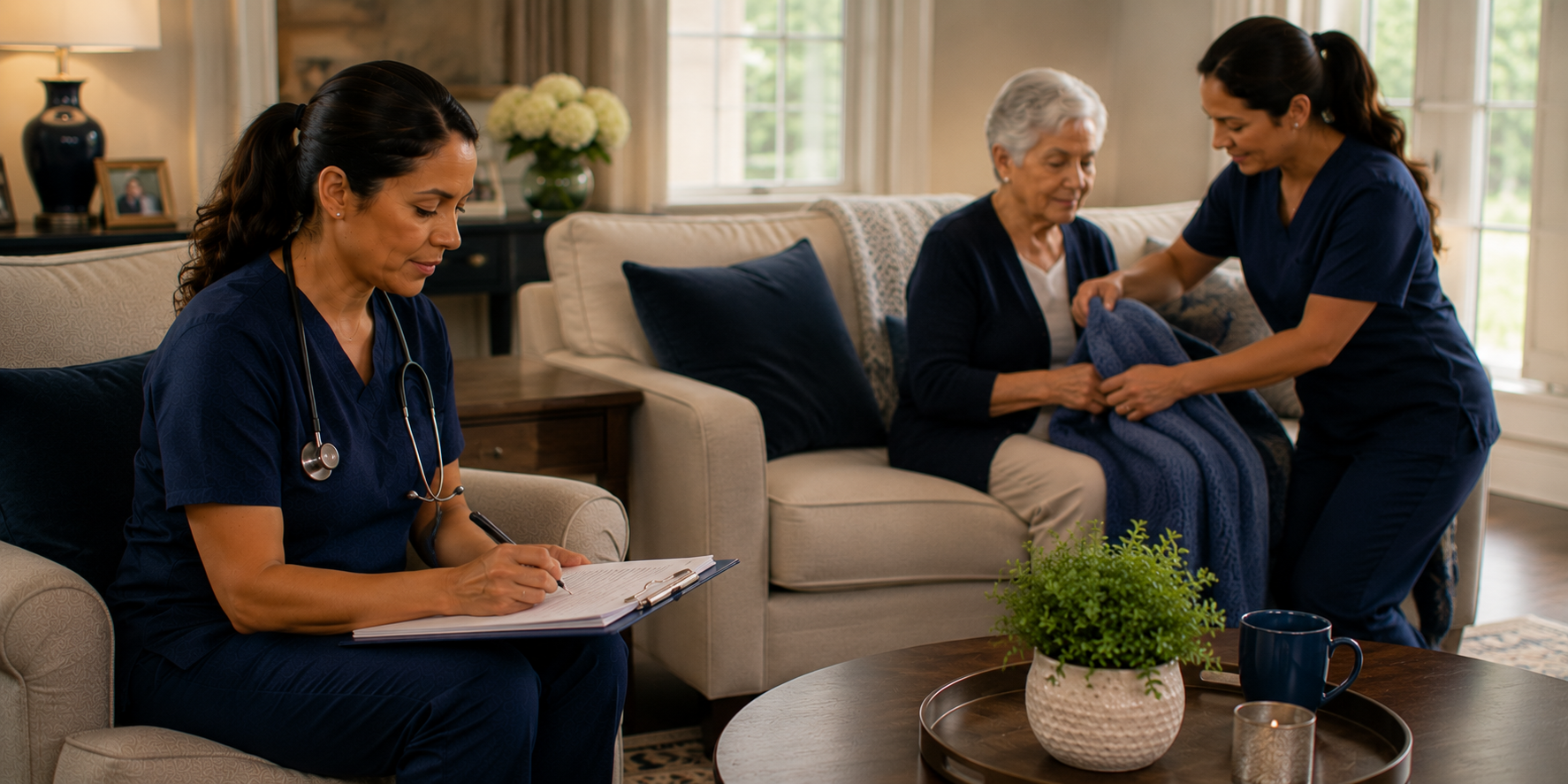
When families are exploring homecare for the first time, one of the most common points of confusion is the difference between a nurse and a caregiver. Both are present in the home. Both are involved in care. But what they are trained to do, what they are authorized to do, and what role they play in your loved one’s safety are meaningfully different — and understanding that difference changes how you evaluate your options.
What a Caregiver Does
Personal Care and Daily Living Support
Certified Nursing Assistants and Home Health Aides are trained to assist with bathing, dressing, grooming, mobility, meal preparation, and light housekeeping. They provide the consistent, hands-on daily support that makes staying at home possible.
Companionship and Routine
Beyond the physical tasks, a good caregiver provides consistent human presence — conversation, engagement, structured daily activity, and the kind of familiar routine that is particularly important for someone with dementia or cognitive decline.
Observation and Reporting
Caregivers are the first line of observation. They notice when appetite changes, when someone seems off, when something is different from yesterday. Their observations are critically important — but they are trained to report what they see, not to clinically interpret it.
What a Nurse Brings That a Caregiver Cannot
Clinical Assessment and Interpretation
A registered nurse evaluates what caregivers observe and determines what it means clinically. Is the change in behavior a UTI, a medication side effect, early pneumonia, or the disease progressing? A nurse can make that distinction. A caregiver cannot — and should not be expected to.
Care Planning Based on Medical Training
The instructions a caregiver follows come from somewhere. In a nurse-led model, they come from an RN who has assessed the person clinically and built a plan around their specific diagnosis, medical history, and current condition. In a staffing-based model, they often come from a coordinator completing a form.
Direct Coordination With Physicians
When something changes clinically, a nurse can communicate with the physician in clinical language, convey the right information, and get the right response. This coordination — between what is happening at home and what the medical team knows — is one of the most undervalued things nursing oversight provides.
Why the Combination Is What Works
Caregivers Without Nursing Oversight Are Limited
A caregiver doing their best without clinical guidance is like a very attentive employee without a manager — well-intentioned but missing the framework that tells them what to prioritize, what to escalate, and what to do when the situation is outside their training.
Nursing Oversight Without Daily Caregiving Presence Misses the Picture
A nurse who assesses a client once a month and receives no consistent daily information from the home is working with incomplete data. Nursing oversight is most powerful when it is informed by daily, consistent observation from a caregiver who knows the person well.
The Model That Works Is Both Together — With a Nurse Leading
At Consistent Solution Nursing, every client has both: consistent caregiving from trained CNAs and HHAs who are in the home daily, and RN oversight from nurses who are actively involved in the case — not just on paper. This is what makes our model clinically meaningful rather than just logistically convenient.
If you are comparing homecare options and trying to understand what you are actually choosing between, call us. We will walk you through exactly what our model looks like and what it provides.