When a family brings in hospice care, the relief is often immediate. There is a team involved. Nurses are visiting. Someone is managing the medications. It feels like a plan is in place. And then, within the first week or two, families discover the gap — the long hours between hospice visits when all of the daily physical care still falls on them.
This is the hospice gap. It is not a failure of hospice — hospice is designed around a specific set of services. But understanding exactly what hospice covers and what it does not is essential for families making decisions about end-of-life care at home. And knowing how a private duty care team works alongside hospice is what makes the difference between a plan that works and one that exhausts the family.
What Hospice Actually Provides
Medical Management and Symptom Control
The hospice nurse visits regularly to manage pain, adjust medications, address symptoms, and monitor the patient’s medical status. This is genuinely valuable and is the core of what hospice is designed to do. Comfort and dignity in the final stage of illness is the goal, and the hospice medical team works toward that goal with real expertise.
Emotional and Spiritual Support for the Whole Family
Social workers and chaplains are part of the hospice team — available for both the patient and the family. Grief support, practical guidance, and the human presence of people who are experienced with end-of-life situations is a meaningful part of what hospice provides.
Medications and Equipment Related to the Terminal Diagnosis
Hospice covers the medications and medical equipment — hospital bed, wheelchair, oxygen — that are related to the terminal diagnosis. This is a significant benefit that families often underestimate until they see the alternatives.
What Hospice Does Not Cover
Daily Personal Care
Bathing, dressing, grooming, repositioning, oral hygiene, wound care related to conditions other than the terminal diagnosis — these are not covered by hospice. They are the family’s responsibility, or the responsibility of a private duty care team.
Around-the-Clock Presence
Hospice nurse visits are periodic — typically a few times a week. The many hours between those visits, including nights, weekends, and the extended daily stretches when the patient needs physical assistance, are not covered.
The Work of Keeping Someone Comfortable All Day
The consistent, attentive, physically demanding work of caring for someone in the final stage of life — turning them to prevent pressure injuries, keeping their mouth moist, ensuring they are comfortable, managing the practical reality of serious illness — is done by the person’s family or their private duty care team.
How CSN Works Alongside a Hospice Team
We Fill What Hospice Cannot Cover
Our caregivers provide the daily personal care, the overnight presence, and the consistent physical support that makes dying at home genuinely possible. We communicate directly with the hospice team so that clinical observations from our caregivers reach the hospice nurse and medical team without delay.
We Give Families Back Their Role
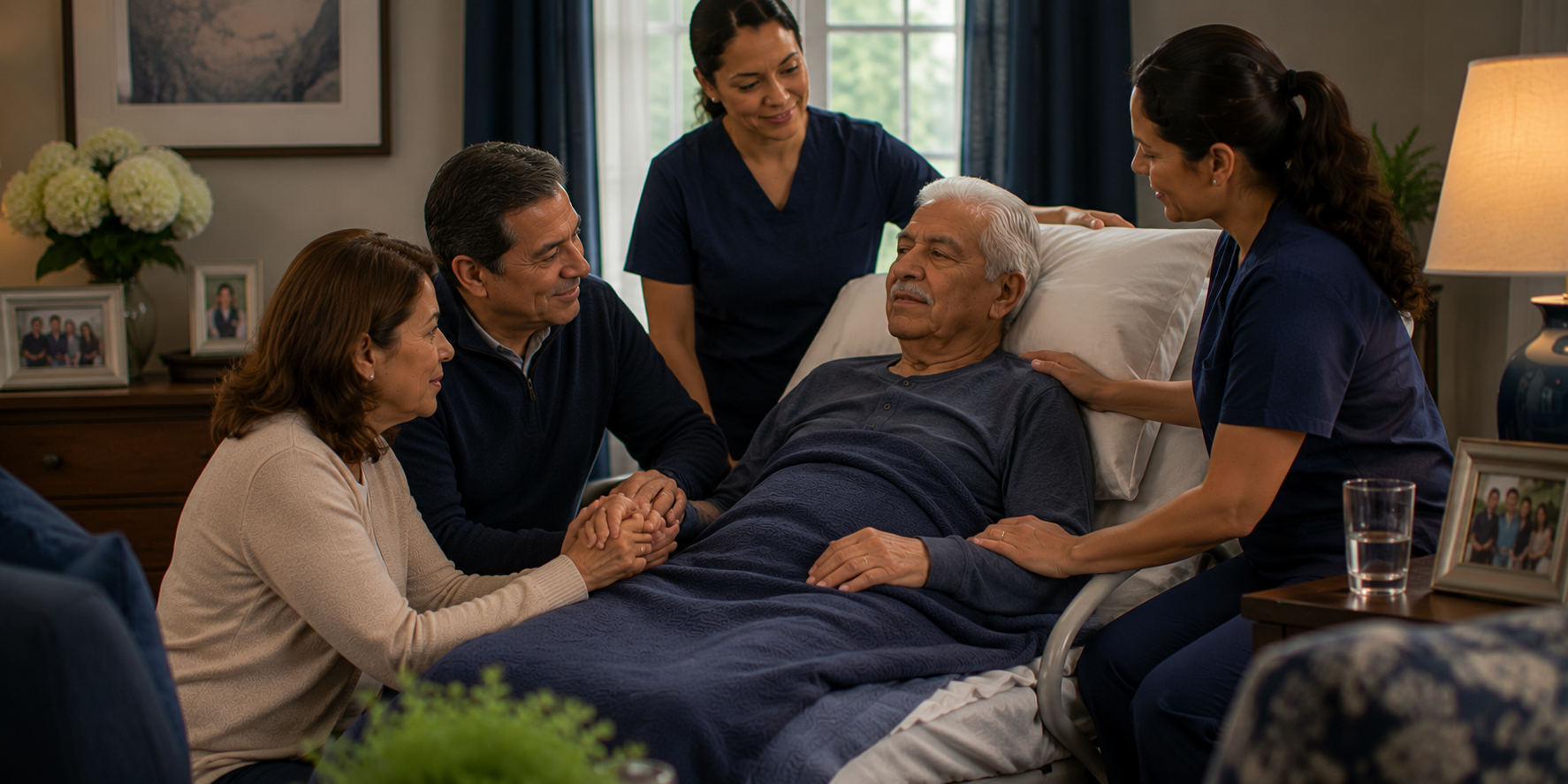
When a professional care team is handling the physical caregiving, families can be present as family. As a daughter, a son, a spouse — not as an exhausted solo caregiver managing every physical need around the clock. That shift is profound, and it is what allows families to be present in the way they want to be during this time.
End-of-Life at Home Is Possible — With the Right Team
We have walked this road with many families. We know what it requires — practically, clinically, and humanly — and we know how to do it well alongside a hospice team. If your loved one is on hospice and the daily care is falling on your family, call us. We are glad to talk through what support could look like.