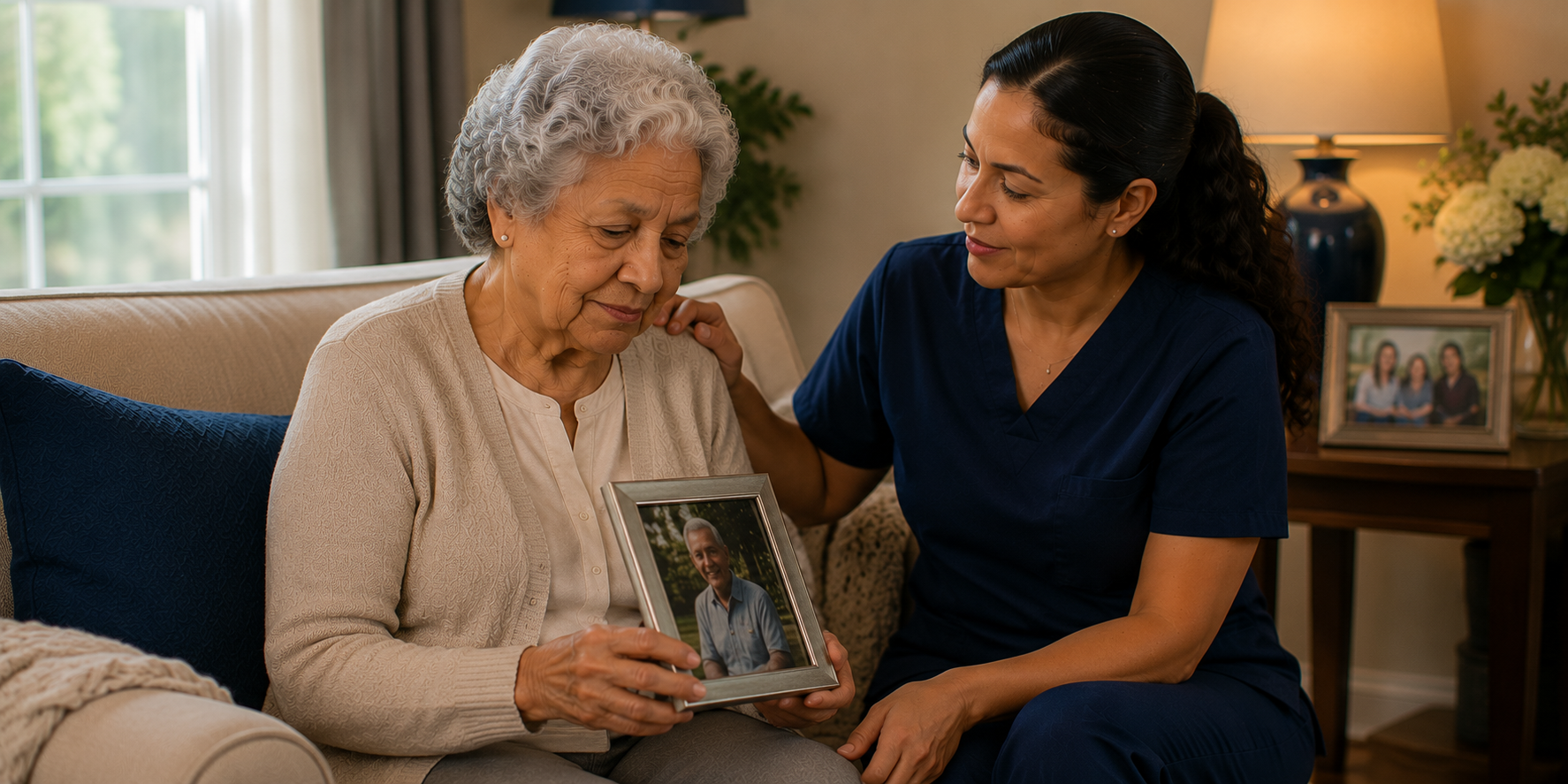
Your father’s wife of 58 years died in March. By June, you notice he is not himself. He has lost weight. He barely leaves the house. He does not seem interested in the things that used to matter to him. He says he is fine — but the way he says it tells you he is not. You are not sure whether what you are seeing is grief, or depression, or something more, or all three at once.
Grief in older adults is one of the least-discussed aspects of aging — and one of the most clinically significant. It is often underrecognized, under-treated, and confused with other conditions. Understanding what grief looks like in older adults, when it requires clinical attention, and how good care supports someone through it is important for every family caregiver.
What Grief Looks Like in Older Adults
Physical Symptoms Are Common and Real
Grief is not only an emotional experience. It has real physical manifestations — disrupted sleep, reduced appetite, fatigue, physical pain, and a weakened immune response. In an older adult with existing health conditions, these physical effects of grief can have serious clinical consequences.
Cognitive Changes That Look Like Dementia
Acute grief can produce significant cognitive symptoms in older adults — difficulty concentrating, memory lapses, confusion, and disorientation — that can be mistaken for early dementia or dementia progression. These cognitive changes are real, but they are grief-related and not necessarily permanent.
Social Withdrawal and Loss of Purpose
When the person who structured someone’s days, gave them purpose, and provided consistent human connection is gone, the daily rhythm of life can feel purposeless. Withdrawal from social activities, loss of interest in hobbies, and a diminished sense of purpose are common and should not be dismissed as ‘normal’ aging.
When Grief Becomes Something That Requires Clinical Attention
Complicated Grief Is Not Just Intense Grief
Most people move through grief in waves — hard periods followed by relative stabilization. Complicated grief — also called prolonged grief disorder — is different. It is grief that does not follow this trajectory, that remains intensely disabling for months, and that significantly impairs daily functioning. This is a clinical condition that responds to treatment.
Depression Following Loss Is Not the Same as Grief
Major depression following the death of a loved one is common and is clinically distinguishable from normal grief. It does not improve with time alone. It requires clinical evaluation and often treatment — therapy, medication, or both. Attributing all post-loss distress to grief can delay treatment for depression that is fully treatable.
How Good Home Care Supports Grieving Older Adults
Consistent Human Presence Matters Enormously
One of the most powerful clinical interventions for grief in older adults is consistent, meaningful human contact. A caregiver who shows up on schedule, who knows the person, who engages in real conversation, and who provides structure to the day addresses one of the most fundamental needs of someone who has lost their primary companion.
Practical Support Removes Barriers to Daily Functioning
Grief is harder to navigate when daily life is also falling apart. A caregiver who ensures that meals happen, medications are taken, and the house is managed gives a grieving person the bandwidth to grieve without also struggling with the logistics of daily survival.
Clinical Monitoring Catches What Needs Attention
Our RNs monitor grieving clients for the signs of complicated grief and depression, for the physical health changes that grief produces, and for the clinical situations — significant weight loss, sleep disturbance, social isolation — that require physician attention.
Grief Is a Clinical Concern — and It Deserves Real Support
At Consistent Solution Nursing, we work with many clients who are managing significant loss. Our caregivers are not grief counselors — but they are consistent, compassionate human presences in difficult times, and they are trained to recognize when clinical escalation is needed.
If you are watching a parent struggle following a significant loss and you are not sure what they need, call us. We are glad to talk through the situation and help you figure out what kind of support actually makes sense.