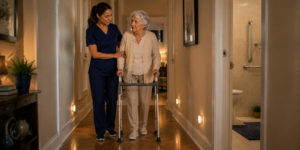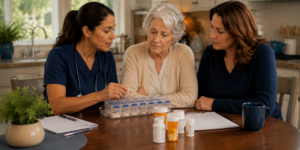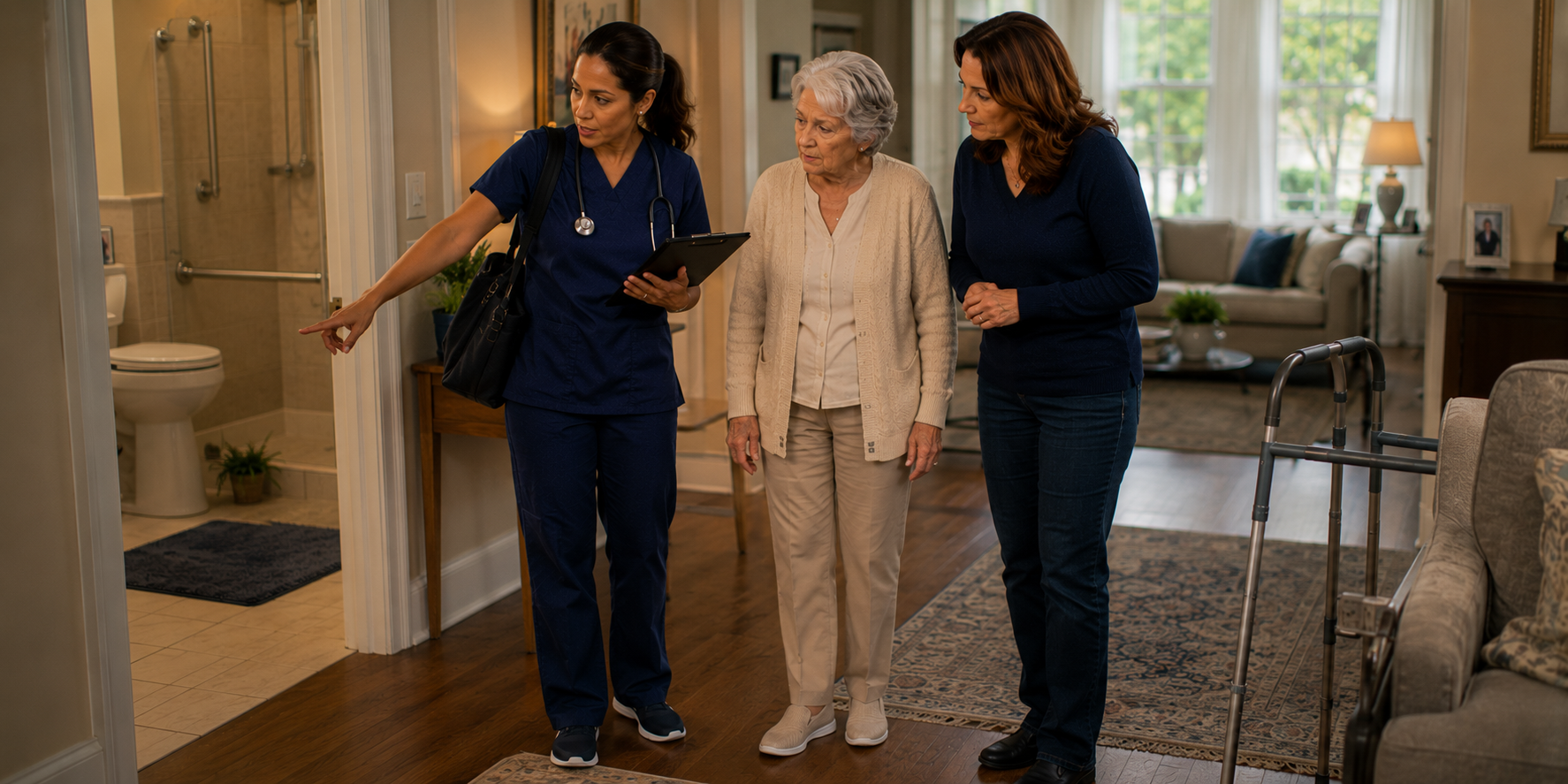
Most families think about home safety in terms of obvious hazards. A loose rug. A broken step. A bathroom without grab bars. These matter — but a clinical home safety assessment goes much further than a general checklist. It looks at the specific person in the specific home and asks: given who this individual is, how they move, what conditions they have, and what medications they are on — what in this environment is most likely to hurt them?
That specificity is what makes the difference between a general safety sweep and a real clinical assessment. And it is why having a nurse walk through a home tells you things that a family member, no matter how attentive, is often not in a position to see.
What We Look at Room by Room
The Bedroom — Where Many Days Begin and End
How does this person get in and out of bed? Is the bed at the right height for safe transfers? Is there adequate lighting when they get up at night? Is there anything between the bed and the bathroom that creates a hazard in the dark? These are the questions a nurse is asking before anything else in the morning matters.
The Bathroom — The Highest-Risk Room in the House
Grab bar placement relative to how the person actually moves in and out of the shower. Nonslip surfaces inside the tub and on the floor outside it. Water temperature settings that prevent accidental scalding. Adequate lighting. A shower chair if needed. A bath mat that will not slide. Each of these is specific, and each of them matters.
The Kitchen — Where Meals and Medications Often Happen
Stove safety for someone who may forget they have left something on. Medications stored in a way that makes consistent daily management possible. Access to the things they use most often without reaching, climbing, or stretching in ways that compromise balance.
Pathways and Transitions Throughout the Home
Every rug edge, every threshold, every step without a handrail, every piece of furniture being used as support that was not designed for that purpose — these are the things a clinical assessment identifies specifically for this person in this home.
What Changes Are Usually Recommended
Most Changes Cost Very Little
The highest-impact home safety changes are almost never expensive. Removing a rug. Moving a piece of furniture. Adding a nightlight. Repositioning a grab bar. Placing frequently needed items at accessible heights. The value is not in expensive modifications — it is in knowing exactly what to change for this specific person.
Some Changes Require Installation
Grab bars that are properly anchored, a handheld showerhead, a raised toilet seat, a ramp over a threshold — some modifications require installation, but they are rarely significant expenses. And they are far less expensive than what they prevent.
When Is the Right Time for an Assessment
Before a Move Back Home After Hospitalization
The home environment that was manageable before admission may not be safe for someone returning home weaker and less steady than when they left. A pre-discharge assessment is one of the most valuable things a family can do.
When You Have Noticed Any Change in Stability or Cognition
If your parent is less steady, more forgetful, or managing the daily routine with more difficulty than before — the home environment needs a fresh set of eyes. Conditions change and so does risk.
Before You Think You Need It
The families who benefit most from a home safety assessment are the ones who did it before an incident, not in response to one. The goal is prevention, and prevention requires acting before things go wrong.
One Visit Can Change the Entire Safety Picture
A clinical home safety assessment is one of the highest-value things a family can do — and it is something we provide as part of our intake process for every new client. We walk through the home with clinical eyes, identify what needs attention, and help the family make a plan.
At Consistent Solution Nursing, we serve families throughout Greater Boston. If you are not sure whether your parent’s home is as safe as it could be, call us. We will come and take a look — and give you a real, honest picture of what we find.