A fall is the event that changes everything for many families. One moment everything is manageable. The next, there is a hip fracture, a surgery, a hospitalization, a rehabilitation stay — and a parent who comes home significantly weaker than they went in. The independence they had before may never fully return.
What makes this particularly hard is that most falls are preventable. Not all of them — but most. And the factors that make a fall likely are identifiable in advance, by someone who knows what to look for. This is what a clinical home safety assessment does. This is what good homecare prevents.
When Falls Are Most Likely to Happen
First Thing in the Morning
Getting out of bed is one of the highest-risk moments of the day. Blood pressure has not yet adjusted to standing. Muscles are stiff. Balance is not fully engaged. The transition from lying down to standing up requires more physical coordination than most people realize — and for an older adult with any degree of weakness or cognitive impairment, it is a genuine danger zone.
Nighttime Trips to the Bathroom
The combination of darkness, grogginess, urgency, and unfamiliar footing makes nighttime bathroom trips responsible for a disproportionate number of falls. A person who navigates their bedroom perfectly during the day can lose their bearings completely at 3 AM.
Transitioning Between Surfaces
Stepping from carpet to hardwood, from inside to outside, over a threshold, into or out of the shower — every change in surface is a fall risk for someone whose balance or coordination is compromised. These transitions happen dozens of times a day and rarely get the attention they deserve.
What a Clinical Home Assessment Looks for
Grab Bar Placement — Not Just Presence
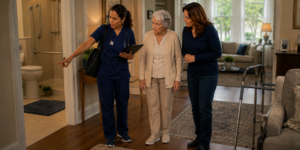
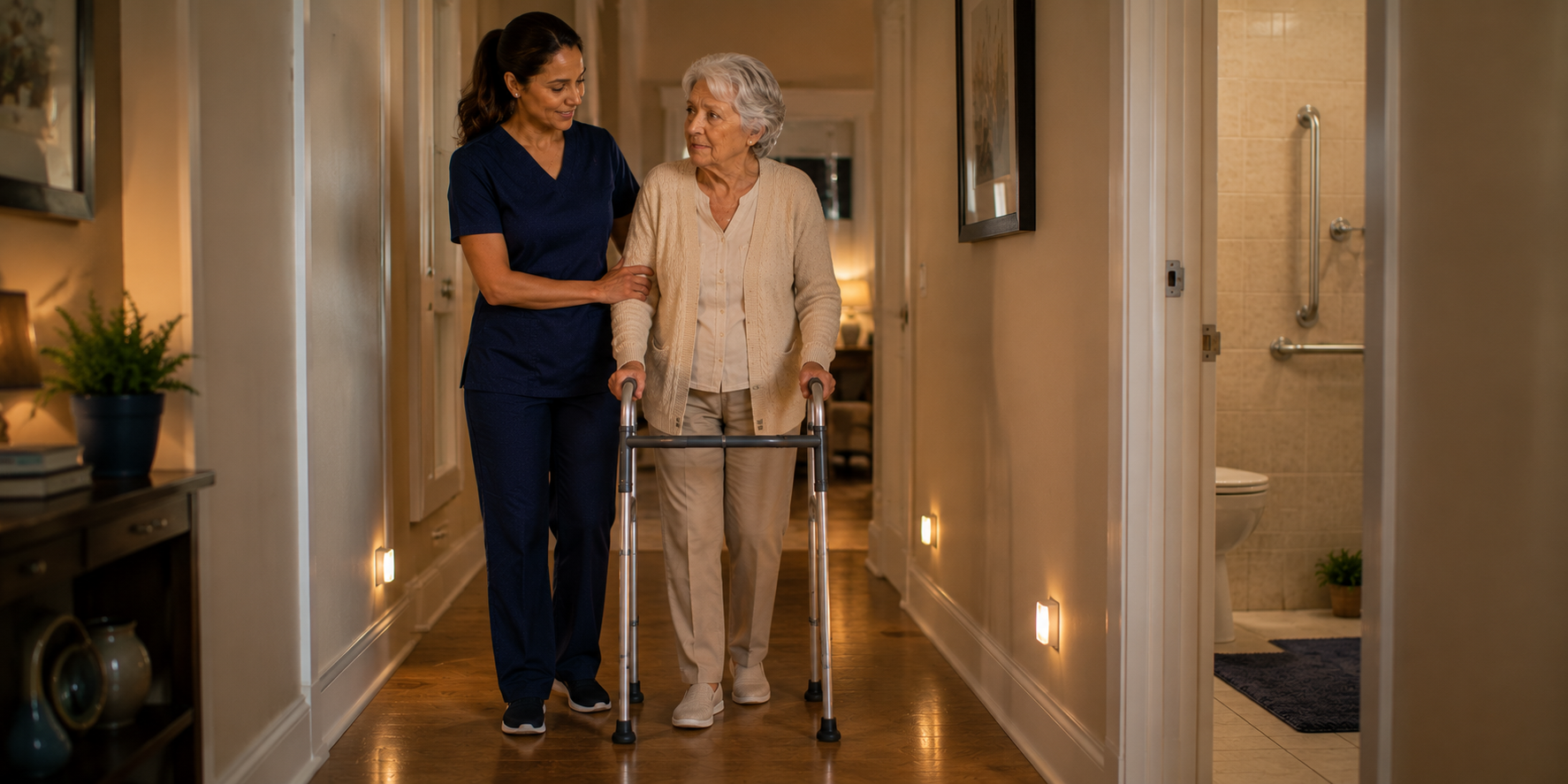
Most families know grab bars are important. What they do not always know is that grab bars in the wrong position are nearly useless. A grab bar on the wrong wall, at the wrong height, or not rated for the person’s weight does not prevent falls. A nurse assessing the bathroom looks at how the person actually moves, not just whether bars exist.
Lighting — Day and Night
Lighting that is adequate during the day may be completely insufficient at night. A clinical walkthrough at multiple times of day tells a different story than a daytime visit. Nightlights, motion-activated lights, and clear paths from bedroom to bathroom are among the simplest and most impactful interventions.
The Furniture People Are Actually Using for Support
In almost every home we assess, there is furniture being used as a grab rail that was not designed for that purpose. A rolling chair. A side table on casters. A towel rack. Identifying these and replacing them with proper support is something families rarely notice until a nurse points it out.
What Caregivers Do to Prevent Falls Daily
Be Present During the Moments That Matter
The most effective fall prevention is a trained caregiver physically present during the transitions that carry the most risk — getting up in the morning, going to the bathroom, getting in and out of the shower. Not watching from across the room. Present and ready.
Maintain Strength and Mobility Over Time
Daily gentle movement — guided walks, simple exercises, getting up and sitting down with support — maintains the muscle strength and balance that are the real long-term protection against falls. A person who moves every day is significantly less likely to fall than one who sits most of the day.
Prevention Is Always Better Than Recovery
We have seen what a serious fall does to a family. The surgery. The rehabilitation. The loss of confidence that makes a parent afraid to move through their own home. We have also seen what consistent clinical oversight and trained daily caregiving prevents. The difference is significant.
At Consistent Solution Nursing, fall prevention is written into every care plan we build. We assess the home, identify the risks specific to your loved one, and provide the daily support that keeps those risks from becoming incidents. We serve families throughout Greater Boston — call us and let’s take a look.