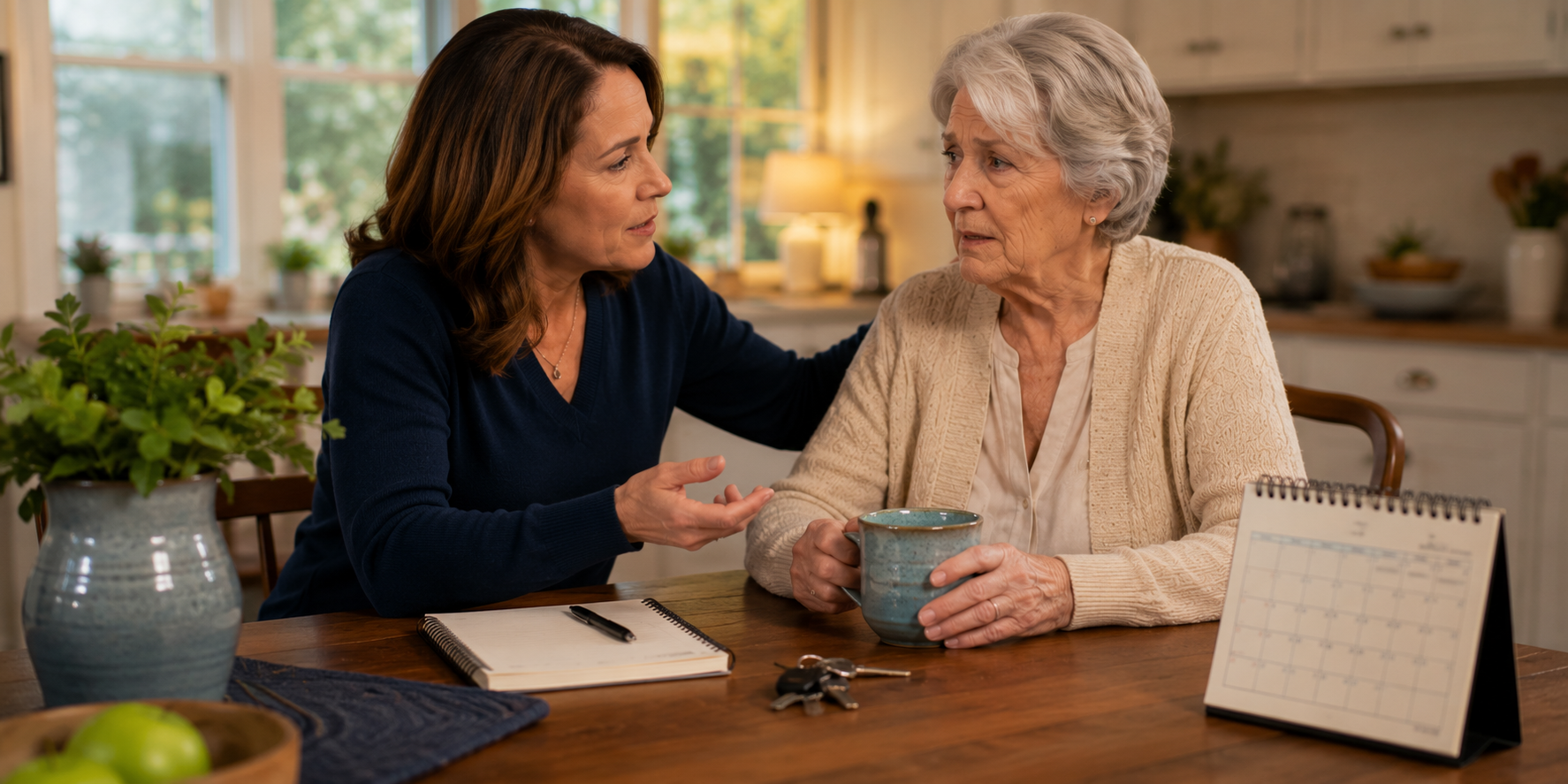
Your father forgot where he put his keys. Your mother called you by your brother’s name. Your parent repeated a story they told you last week. And now you are sitting with a question you are not sure you want the answer to: is this normal aging, or is this something more?
It is one of the most common conversations we have with families — and one of the most important ones to get right. Because the earlier a real cognitive issue is identified, the more options families have. And because spending years worried about something that turns out to be completely normal aging is its own kind of toll.
What Normal Aging Actually Looks Like
Occasional Forgetfulness Is Expected
Forgetting where you left your phone, blanking on a name in conversation, walking into a room and forgetting why — these happen to healthy adults of every age and become more common as we get older. They are annoying. They are not dementia.
Slower Processing Is Normal
It takes longer to learn new things, longer to recall information under pressure, and longer to adapt to changes in routine. These are normal features of an aging brain — not warning signs of disease.
The Key Question Is Function
Normal age-related memory changes are inconvenient. They do not prevent someone from managing their daily life. If your parent can still cook, pay bills, take their medications, and navigate familiar places — even if more slowly than before — that is meaningfully different from what dementia looks like.
Signs That Deserve a Closer Look
Getting Lost in Familiar Places
Becoming disoriented while driving a route they have driven for 30 years, or not being able to find their way home from the grocery store, is not a senior moment. It is a significant warning sign that needs clinical attention.
Repeating the Same Thing in the Same Conversation
Forgetting a story they told last week is normal. Telling you the same story three times in the same hour — and not realizing they have done it — is not. The absence of awareness of the repetition is the clinical concern.
Difficulty With Familiar Tasks
Struggling to follow a recipe they have made a hundred times, losing track of how to use appliances they have operated for years, or becoming confused by tasks that used to be completely automatic — these are meaningful changes worth taking seriously.
Personality and Behavior Changes
Becoming more suspicious, more withdrawn, more irritable, or more passive than their lifelong personality would suggest — these are frequently early signs of dementia that families attribute to depression or stress rather than neurological change.
What to Do If You Are Concerned
Document What You Are Seeing
Keep a simple log of specific incidents — what happened, when, and how often. This makes the conversation with a physician far more productive than ‘I’ve been a little worried.’ Specifics lead to action. Vague concern often gets reassurance without evaluation.
Request a Cognitive Screening
Primary care physicians can administer basic cognitive assessments during a regular appointment. If concerns are significant, a referral to a neurologist or geriatric specialist is appropriate. Push for this if the initial response is dismissive.
Do Not Wait for a Crisis
Families who act on early signs — even uncertain ones — consistently have better outcomes than families who wait until something goes wrong. Early diagnosis means more time to plan, more treatment options, and the ability to build support gradually rather than in response to an emergency.
If Something Feels Off, Trust That Instinct
You know your parent. You know what they were like five years ago. If something has changed — if the person in front of you is different from the one you have always known — that observation matters. It deserves a real conversation with a medical professional, not dismissal.
At Consistent Solution Nursing, we work with families at every stage of this journey — from early concern through advanced care. If you are not sure what you are seeing or what to do next, we are glad to talk it through with you.