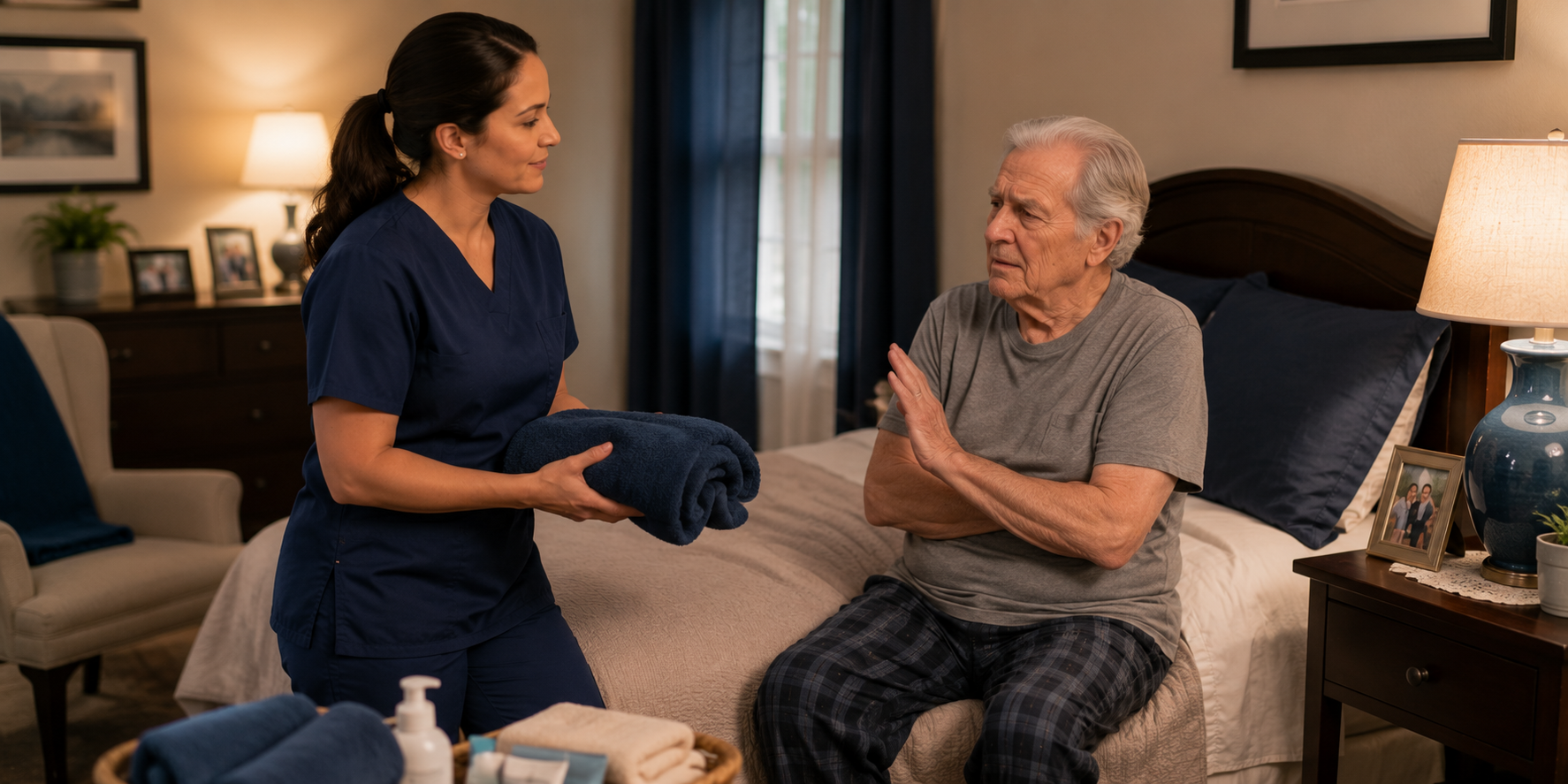
You show up on a Tuesday morning ready to help your father shower and get dressed. He looks at you and says no. Not politely. Firmly. He doesn’t want help. He’s fine. He doesn’t need you. And no matter what you say, the answer stays no.
If you have been in this moment, you know how demoralizing it is. You are not trying to take anything from him — you are trying to keep him safe and healthy. And yet here you are, at an impasse, wondering whether to push through or back down. This is one of the most common and least-talked-about challenges in dementia caregiving. And there are ways through it.
Why Refusal Happens
The Awareness of Decline Is Painful
Many people in the early and middle stages of dementia have some awareness that something is wrong. Accepting help — especially with something as personal as bathing or dressing — makes that reality impossible to ignore. Refusal is often a way of holding onto the version of themselves that did not need help.
Fear and Embarrassment Play a Role
Being bathed or dressed by another person is deeply personal. For someone whose judgment is impaired, it can feel frightening or violating even when offered with complete kindness. They may not be able to articulate why they don’t want help — only that they don’t want it.
The Brain Misreads the Situation
In more advanced stages, refusal can stem from genuine confusion about who is offering help and why. A person who does not recognize their caregiver may experience a kind, routine interaction as a threat. The behavior makes sense when you understand what the brain is experiencing.
Approaches That Actually Work
Don’t Ask — Offer
‘Would you like to take a shower?’ almost always gets a no. ‘Let’s go get you cleaned up before breakfast’ — said calmly and as an assumption rather than a question — often works better. The language of choice invites resistance. The language of routine invites compliance.
Give It 20 Minutes and Try Again
Timing matters enormously in dementia care. If your loved one says no right now, the brain that is refusing may be in a very different place in 20 minutes. Step away, do not escalate the moment, and return with the same calm energy as if the first attempt never happened.
Change Who Is Asking
Sometimes the refusal is specifically about the person making the request — not the request itself. A loved one who will not allow a daughter to help them bathe may accept the same help from a professional caregiver without hesitation. This is not personal. It is the disease affecting how they perceive different relationships.
Make It Feel Familiar and Safe
Use the same routine, in the same order, at the same time of day. Dementia brains find safety in repetition. A caregiver who approaches personal care the same way every time eventually becomes part of the expected routine — and refusal becomes less frequent.
When to Ask for Help
When Refusal Is Affecting Health and Safety
Missing showers for a week is uncomfortable. Missing them for a month creates real skin and hygiene risks. When refusal is consistent and affecting your loved one’s physical health, it is time to bring in professional support — and sometimes a clinical approach makes all the difference.
When the Conflict Is Damaging the Relationship
If every morning starts with a battle and the relationship between you and your loved one has become strained and adversarial, that is a signal too. Families who hand off personal care to a professional caregiver often find that their relationship with their loved one improves almost immediately.
You Should Not Have to Fight for This Every Day
Resistance to care is one of the most exhausting parts of dementia caregiving — not because any single moment is impossible, but because it happens every day. Our caregivers are specifically trained to navigate refusal with patience and technique rather than force or frustration.
At Consistent Solution Nursing, we have helped families find their way through this with every type of personality and every stage of the disease. If care refusal has become a daily struggle in your home, reach out. We can help.