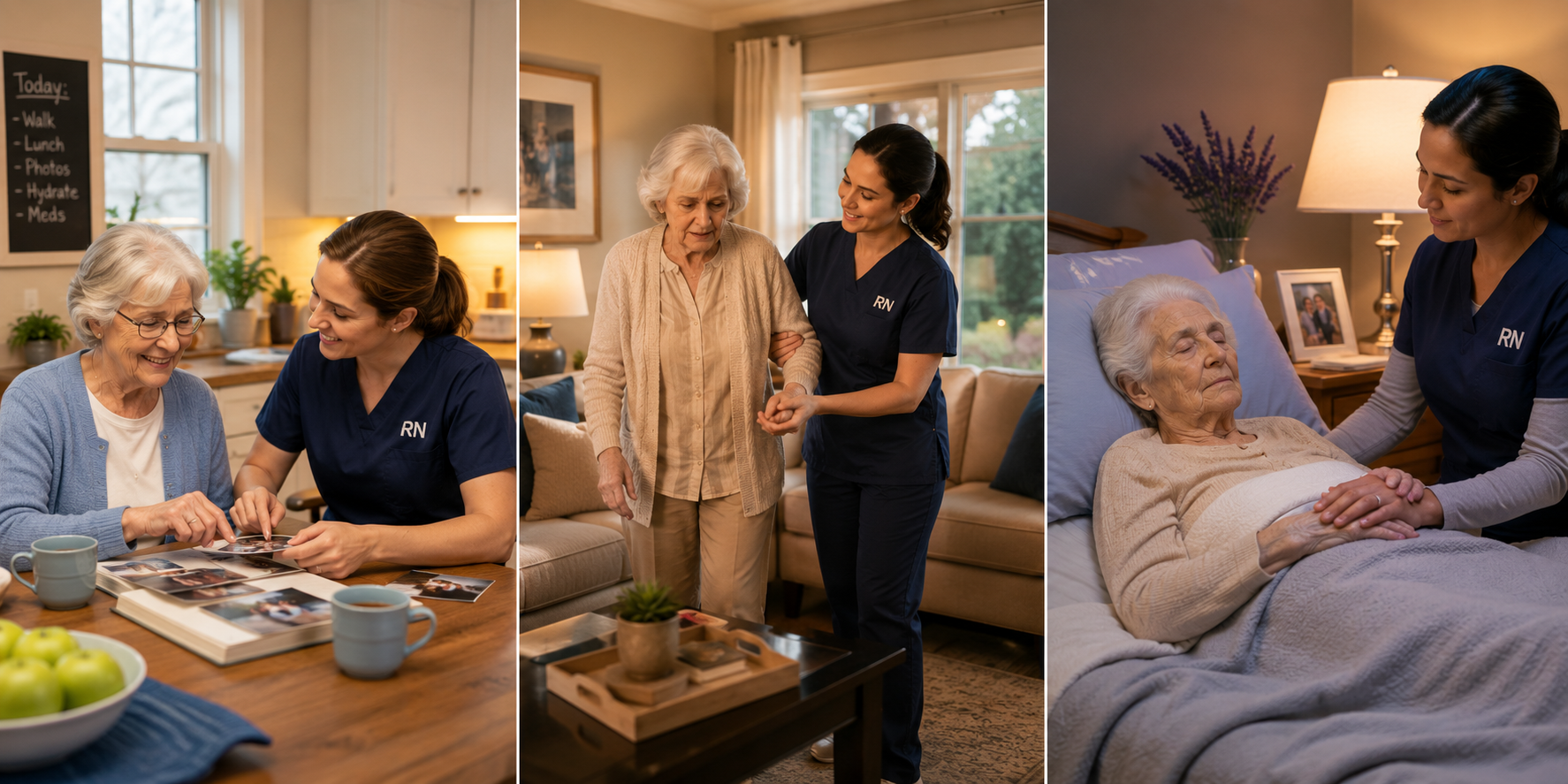
When a parent is first diagnosed with Alzheimer’s disease, one of the first questions families ask is: what is going to happen? It is a hard question to answer because the disease progresses differently for everyone. But understanding the general stages helps families plan ahead, make better decisions, and stop being blindsided by changes they could have prepared for.
Alzheimer’s is typically described in three stages — early, middle, and late. Each one brings different challenges and requires a different level of support. Here is what to expect, and what it means for how you care for your loved one at home.
Early Stage — When Things Start to Shift
Memory Lapses That Are Hard to Dismiss
In the early stage, your loved one may forget recent conversations, repeat questions, or lose track of dates and appointments. They may struggle to find the right word in a conversation or misplace things more often than before. These are not senior moments — they are the beginning of a pattern worth paying attention to.
Independence Is Still Largely Intact
At this stage, most people can still manage daily life with minimal assistance. They may drive, cook, and manage finances — though all of these deserve a closer look. The early stage is the right time to have honest conversations about safety, future planning, and what support might look like as things change.
Emotional Changes Are Common
Depression, anxiety, and withdrawal from social activities are frequent in the early stage. Your loved one may sense that something is wrong long before a diagnosis is made. That awareness, and the grief that comes with it, is real and deserves acknowledgment.
Middle Stage — The Longest and Most Demanding Chapter
Daily Tasks Become Difficult
Bathing, dressing, preparing meals, and managing medications all become increasingly challenging in the middle stage. Your loved one will need hands-on help with more and more of their daily routine. This is usually when families first reach out for professional homecare support.
Behavioral Changes Intensify
Sundowning, wandering, agitation, and confusion are most pronounced in the middle stage. Your loved one may not recognize close family members during episodes. They may insist on things that aren’t true, become suspicious, or behave in ways that feel completely unlike the person you have always known.
Safety Becomes a Daily Conversation
Leaving the stove on, wandering outside at night, falling — the middle stage introduces real daily safety risks that require a plan, not just watchfulness. This is when a clinical home assessment and structured caregiving make the biggest difference.
Late Stage — Focusing on Comfort and Dignity
Around-the-Clock Support Becomes Necessary
In the late stage, your loved one will lose the ability to communicate verbally, recognize family members, or manage any basic physical function independently. Full-time care is not optional at this point — it is what keeps them safe, comfortable, and treated with dignity.
The Goal Shifts to Quality of Life
Treatment at this stage is focused on comfort, not cure. Pain management, skin care, nutrition, and emotional presence become the priorities. Hospice care is often introduced here, working alongside private duty caregivers who provide the daily hands-on support hospice does not cover.
Families Need Support Too
The late stage is as hard on families as it is on the person living with the disease. Grief, exhaustion, and the weight of every decision are real. Families who have professional support in place — and who aren’t doing this alone — consistently fare better through this stage.
Planning Ahead Makes Every Stage More Manageable
The families who navigate Alzheimer’s best are the ones who got the right support in place before each stage demanded it. Not in response to a crisis — ahead of one.
At Consistent Solution Nursing, we work with families at every stage of Alzheimer’s and dementia. Our RNs assess where your loved one is right now and build a care plan around what they actually need today — with a clear eye on what is coming next. We serve families across Greater Boston and we are here for every part of this journey.