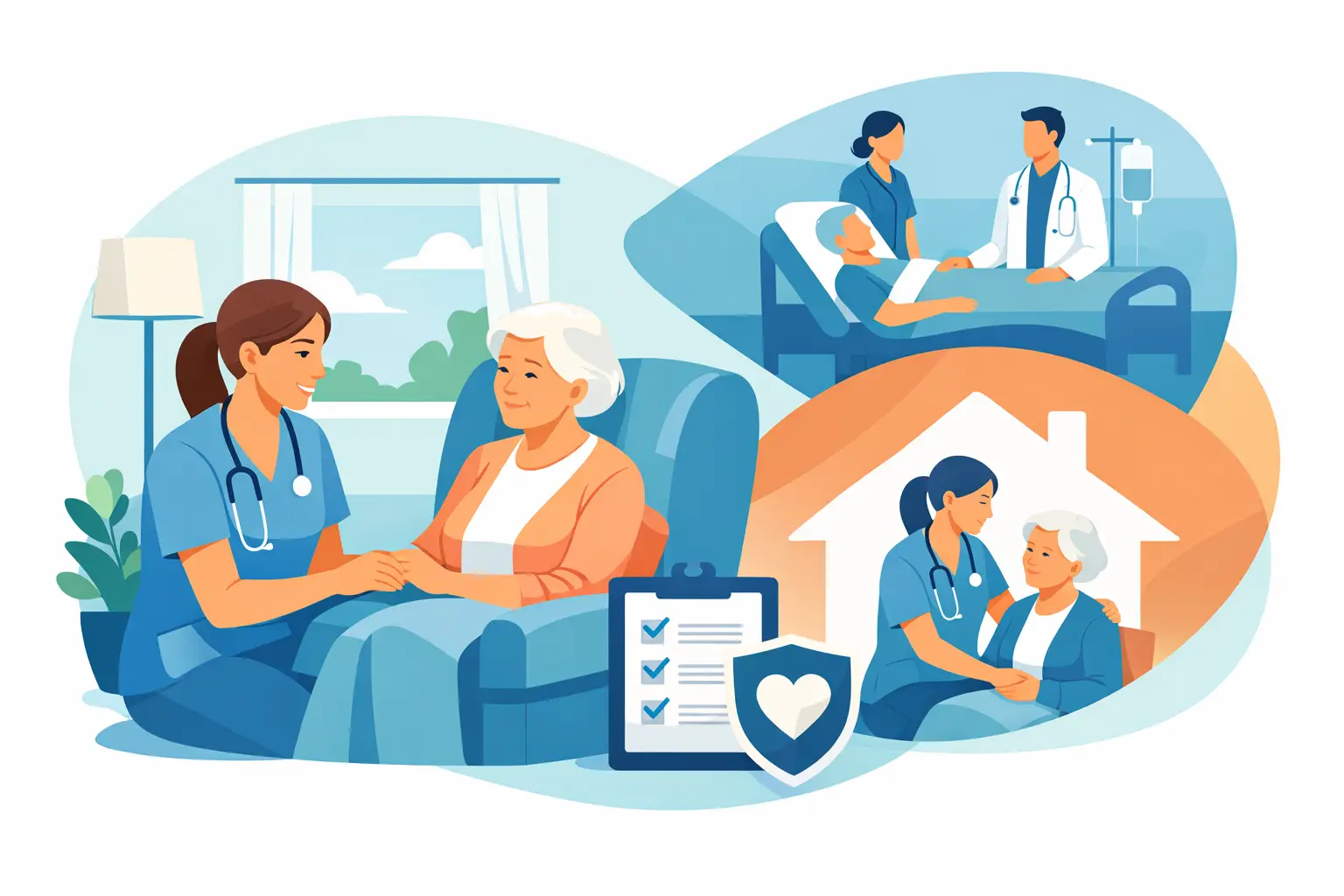
A hospital discharge can turn a manageable family routine into a series of urgent questions: Who will be there overnight? Who will notice a change in breathing, confusion, mobility, or medication response? Who can coordinate care when several relatives are trying to help from different homes or different states? Private duty nursing gives families a structured option when care requires more than occasional help or an informal caregiver arrangement.
For older adults and medically complex clients, the need is rarely limited to one task. A loved one may need assistance getting safely to the bathroom, reliable medication support, observation after a fall or illness, dementia routines that reduce distress, and clear updates for family members. The quality of the plan matters as much as the number of hours on the schedule.
What private duty nursing means in practice
Private duty nursing is individualized, private-pay nursing care delivered in a client’s home or another setting where the client is living or recovering. Depending on the care plan, services may be provided through RN visits, LPN shifts, or a coordinated combination of nursing and non-medical caregivers.
The right service model depends on the person’s condition and the risks involved. An RN may assess a client’s needs, establish clinical priorities, oversee a plan, and provide skilled visits. An LPN may provide ongoing nursing support within the appropriate scope of practice and under the direction required by the care plan. Personal care caregivers may assist with daily routines such as bathing, dressing, meals, transfers, toileting, companionship, and overnight supervision.
These roles should not be treated as interchangeable. A family may start by asking for “someone to stay with Mom,” only to find that the real need includes fall prevention, medication routines, changes in cognition, communication with a physician’s office, and consistency across multiple shifts. A thoughtful assessment clarifies which responsibilities require nursing judgment, which require hands-on daily support, and how the team will communicate.
Private duty nursing can take place in a private home, senior living community, rehabilitation setting, hospital, memory care community, or hospice environment. It is designed around the individual rather than a fixed facility schedule.
When private duty nursing is worth considering
Families commonly consider nursing support after an acute event, but the need can develop gradually. A spouse may be exhausted after months of managing Parkinson’s symptoms. An adult child may realize that a parent with dementia is no longer safe during evening hours. A client returning home after surgery may need more observation and support than a brief visiting service can provide.
Private duty nursing may be appropriate when a client has changing clinical needs, complex medication routines, recurrent falls, weakness after hospitalization, or symptoms that require close observation. It can also be valuable when a family needs coordinated support around dementia, chronic illness, hospice care, mobility limitations, or recovery after a hospital or rehabilitation stay.
The deciding factor is not simply diagnosis. It is whether the current support system can reliably meet the person’s needs. A client with a stable condition may do well with a few scheduled nursing visits and caregiver assistance. Another client with the same diagnosis may need extended shifts because confusion, wandering, nighttime wakefulness, unsafe transfers, or family caregiver fatigue create daily risk.
A private-pay plan also gives families flexibility. Coverage can begin with a limited schedule, increase during recovery, or expand to 24/7 care when a loved one cannot safely be left alone. The plan should change when the client’s condition changes, rather than forcing the client into a preset package.
The difference between staffing and coordinated care
Finding an available caregiver can solve an immediate scheduling problem. It does not automatically create an accountable care system.
Coordinated private duty care starts before the first shift. An RN should review the case, understand the client’s health history and current needs, identify safety concerns, and create a written plan. That plan should address practical details: mobility assistance, personal care preferences, meal routines, medication support, cognitive cues, escalation instructions, family contacts, and the roles of existing clinicians or facility staff.
Caregiver matching is equally important. A client with dementia may respond best to familiar faces, calm redirection, and a predictable rhythm. A client recovering from surgery may need caregivers who are comfortable with careful transfers, observation, and documenting changes. Personality fit matters, but it must sit alongside competence and a clear understanding of the plan.
Consistency is not always possible when care is around the clock, illness occurs, or schedules change. It should still be the goal. A small, well-informed team is usually safer and less disruptive than a revolving schedule of unfamiliar people. When a change is necessary, structured handoffs help the next caregiver understand what happened during the previous shift, what the client needs that day, and what requires follow-up.
Documentation is part of that accountability. Daily notes can track meals, sleep, mobility, mood, personal care, medication support, and any meaningful changes. Families should not need to reconstruct the day from scattered texts or discover a concern after it has become a crisis. Clear documentation also helps the care team communicate appropriately with physicians, hospice providers, therapy teams, senior living staff, and other involved professionals.
Questions to ask before arranging care
A provider should be able to explain how it evaluates a case, not just how quickly it can fill a shift. Families and referral partners should ask who reviews the client’s needs before care begins, whether there will be a written care plan, and how the team determines when nursing is needed.
It is also reasonable to ask how caregiver teams are organized, what happens when a regular caregiver is unavailable, and how handoffs are handled. For a client with dementia or a high fall risk, a casual replacement without context can create avoidable confusion and safety concerns.
Communication deserves equal attention. Ask how families receive updates, how concerns are documented, and who responds when the client’s condition changes. The answer should be specific. “We communicate regularly” is not a process. A defined approach might include shift notes, scheduled family updates, clinical oversight, and a clear pathway for urgent escalation.
Finally, understand the boundaries of the service. Private duty nursing complements medical care but does not replace emergency services, primary care, hospital treatment, or hospice clinical direction. A responsible provider will coordinate with other professionals when appropriate and state plainly when a client needs a higher level of care.
Building a plan that works for the whole family
The strongest plans begin by listening to the client and family. Safety is essential, but so are familiar routines, privacy, cultural preferences, and the client’s desire to remain involved in daily decisions. Care should preserve independence where it is safe to do so, not take over tasks simply because support is available.
At Consistent Solution Nursing, that approach is organized through four practical steps: listen first, plan before placement, build the right caregiver team, and maintain handoffs and notes. This structure is especially valuable during high-stakes transitions, when a rushed discharge or sudden decline leaves little room for trial and error.
For families throughout Greater Boston, the immediate goal may be getting through the next week safely. The longer-term goal is a care arrangement that can adapt without losing track of the person at its center. Private duty nursing is most effective when it provides both: capable support in the moment and an organized plan for what comes next.
If you are deciding whether care is needed, start with the moments that feel least safe or least sustainable. Those details often reveal the right level of support and the kind of coordination your family needs.