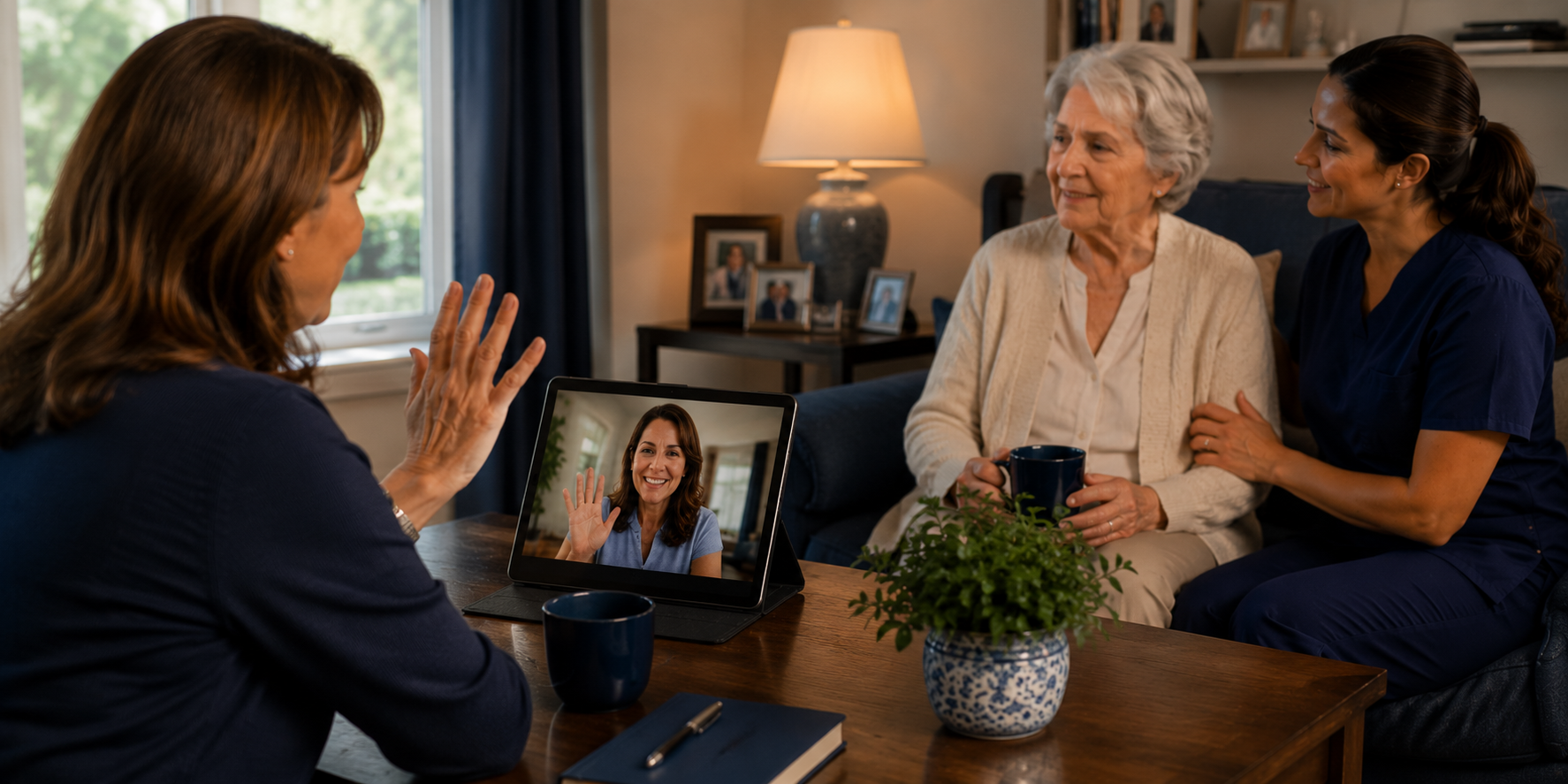
You live in another state. Maybe another time zone. You call every day, you fly in when you can, and you worry constantly about what you are not seeing. The last visit was three months ago and things have changed since then — you could feel it in a single afternoon. Your parent is less steady, more forgetful, quieter than before. And you flew home with a knot in your stomach that hasn’t fully gone away.
Long-distance caregiving is its own particular kind of hard. The not-knowing. The guilt. The phone calls that sound fine but leave you unconvinced. If this is your situation, you are not alone — and there are things you can put in place that genuinely help.
The Unique Challenges of Caring From Far Away
You Can’t See What You Can’t See
A phone call with a parent can sound completely normal even when daily function has declined significantly. Cognitive changes, physical frailty, and home safety issues are invisible over the phone. By the time something is obvious enough to come through on a call, it has often been building for months.
Every Visit Becomes Triage
Families who see a parent quarterly or less often spend entire visits trying to assess the situation — not connecting with their parent as a person. The visit that should be meaningful becomes a fact-finding mission, and everyone leaves exhausted.
Information Gets Filtered
When siblings or other local family members are the primary eyes on the ground, information often gets filtered — intentionally or not. One family member’s ‘she seems fine’ is not the same as a consistent clinical assessment over time.
What Professional Care Provides That Phone Calls Cannot
Daily Written Updates to Everyone Who Matters
Our caregivers send daily progress notes through WhatsApp after every shift. What your parent ate. How they moved. Whether they seemed off. Anything the caregiver observed that matters. Every family member you designate receives the same update — no telephone game, no secondhand information, no family conflict about who has the right picture.
A Clinical Contact You Can Actually Call
When something you read in an update worries you, or when a phone call leaves you uncertain, you have a nurse to call. Someone who knows your parent, has been in the home, and can give you a real clinical read on what is happening. That access changes everything about long-distance caregiving.
Consistent Eyes on the Ground
The most important thing professional care provides to long-distance families is the same trained person in the home, on a consistent schedule, building knowledge of your parent over time. That consistency is what makes early detection possible.
Practical Steps for Long-Distance Families
Get a Clinical Home Assessment Before the Next Crisis
If you are not sure what level of support your parent actually needs, a clinical assessment by an RN gives you an objective picture — not filtered through your parent’s reassurances or your own anxiety. It tells you what is actually there.
Build the Relationship Before the Emergency
The families who navigate crises best are the ones who had professional care in place before the crisis hit. Not families scrambling to find someone at 11 PM after a fall. Build the team while there is time to do it thoughtfully.
Distance Does Not Have to Mean Disconnection
Long-distance families are some of the most relieved families we work with once care is in place. Not because they stop caring — but because they finally have real information, a real team, and the ability to be present for their parent as a family member rather than a long-distance worrier.
At Consistent Solution Nursing, we are the clinical eyes on the ground for families who cannot always be there. We serve Greater Boston and we communicate with families wherever they are. If you are trying to manage a parent’s care from a distance, call us. We can help you build something that actually works.