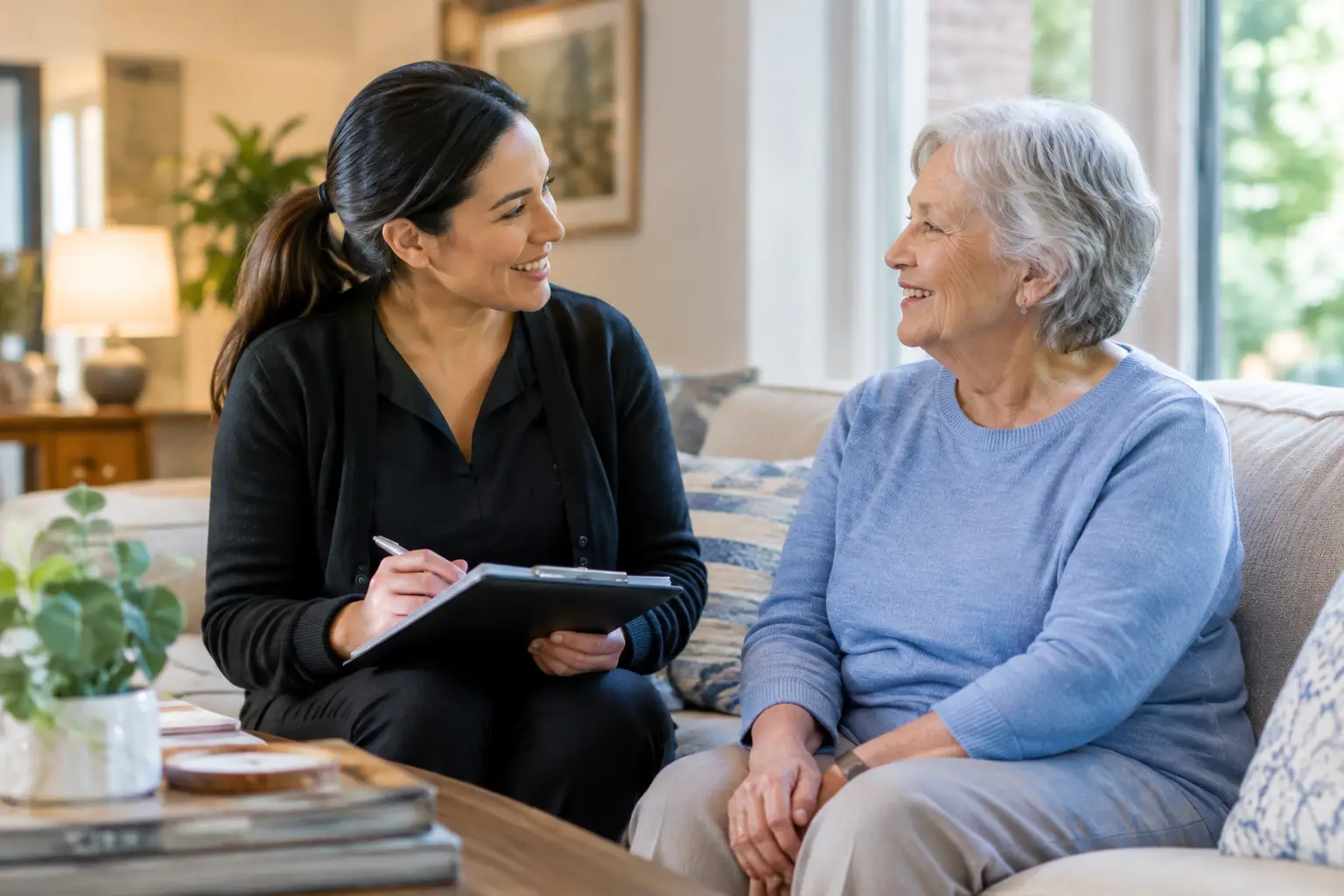
A warm conversation and a reassuring personality can matter when someone will spend hours in your parent’s home. They are not, however, enough to make a safe hiring decision. Knowing how to vet private caregivers means looking beyond first impressions to confirm qualifications, reliability, boundaries, and the person’s ability to follow a clear plan of care.
This process becomes especially urgent after a hospital stay, during a dementia-related routine breakdown, or when family members are trying to coordinate support from different locations. A thoughtful review takes time, but it can prevent avoidable confusion once care begins.
Start With the Work, Not the Candidate
Before reviewing applications or scheduling interviews, define what the caregiver will actually be expected to do. “Help at home” can mean very different things from one family to another. A companion who prepares meals and provides social engagement is not necessarily the right fit for someone who needs hands-on help with transfers, toileting, mobility, or a complex daily routine.
Write down the schedule, setting, essential tasks, and known risks. Consider whether your loved one needs support with bathing and dressing, meal preparation, reminders, overnight supervision, transportation, mobility assistance, memory cues, or post-discharge routines. Also identify what the caregiver should do if your family member becomes confused, refuses care, falls, or has a change in condition.
This is not a clinical care plan on its own. It is a practical starting point that helps you assess whether a candidate’s experience matches the assignment. Without it, families often hire based on availability and then discover that expectations were never clearly aligned.
How to Vet Private Caregivers for the Right Level of Care
The right screening questions depend on the situation. A caregiver who is excellent with an independent older adult may not have the training, physical ability, or judgment needed for someone with advanced memory loss, Parkinson’s-related mobility changes, or a difficult transition home from rehabilitation.
Ask candidates to describe their direct experience with needs similar to your family member’s. Focus on specifics rather than broad statements such as “I have done this for years.” For example, ask how they approach a person who is unsteady when standing, how they encourage a client who does not want to bathe, or how they maintain a familiar evening routine for someone with dementia.
Listen for practical answers. A qualified caregiver should be able to explain how they communicate respectfully, protect dignity, observe changes, and report concerns. They should also recognize the limits of their role. Caregivers can provide valuable personal support and observation, but medical questions, changing symptoms, and clinical decisions may require direction from an RN or another appropriate healthcare professional.
If medication support is part of the schedule, clarify exactly what is expected. Families should not assume that every caregiver can manage medication-related tasks in the same way. Define the routine, documentation expectations, and who should be contacted if a dose is missed, refused, or questioned.
Verify Credentials, Identity, and Work History
A private caregiver should be comfortable with reasonable verification. Ask for government-issued identification, current contact information, relevant certifications, and a detailed work history. If a candidate identifies as a home health aide, certified nursing assistant, LPN, or RN, verify the credential through the appropriate Massachusetts licensing or registry resources rather than relying only on a document provided during an interview.
Credentials do not tell the whole story, but they help establish a baseline. Equally valuable are clear dates of employment, an explanation of prior responsibilities, and consistency between the resume and the interview. Gaps in work history are not automatically disqualifying. What matters is whether the candidate explains them directly and whether the overall record supports the role you are hiring for.
Background screening should be handled carefully and lawfully. Many families choose to request a criminal background check, driving record review when transportation is involved, and confirmation of work eligibility. Obtain appropriate written consent and follow applicable employment and privacy requirements. If you are hiring someone directly, consider consulting an employment or elder care professional about your responsibilities as a household employer.
A care organization with established hiring and oversight processes can reduce some of this administrative burden. The family should still ask what screening is completed, how credentials are monitored, and what happens if a caregiver is unavailable.
Speak With References Who Have Seen the Caregiver at Work
References are most useful when you ask questions that require more than a yes-or-no answer. Request at least two professional references from recent care roles when possible, then schedule time for a real conversation.
Ask what type of support the caregiver provided, how reliably they arrived, and how they handled routine changes. Ask whether they communicated concerns promptly, accepted feedback, and maintained appropriate boundaries in the home. If the former employer was a family, ask whether the caregiver worked well with relatives who had different expectations or lived out of town.
It is also reasonable to ask whether the reference would hire the caregiver again for a comparable assignment. Pay attention to hesitation, vague praise, or answers that do not match the candidate’s description of the job.
A reference check cannot predict every future issue. It does, however, help reveal patterns in dependability, communication, and judgment – the qualities that often determine whether care feels stable over time.
Use the Interview to Evaluate Judgment and Communication
The interview should cover skills, but it should also show you how the candidate thinks. Use realistic scenarios based on your family member’s routine. You might ask what they would do if an older adult who is normally alert seems unusually sleepy, if a family member asks for an update while they are busy assisting with care, or if the client is becoming anxious at sundown.
Strong candidates usually describe a calm sequence: make sure the person is safe, follow the agreed plan, document or communicate what occurred, and escalate concerns to the designated family contact or clinical professional. Be cautious when a candidate promises to handle every situation alone or dismisses the value of documentation.
Discuss communication preferences before hiring. Decide who receives updates, what information should be shared after each shift, and what situations require an immediate call. Written shift notes can be especially helpful when several caregivers support the same person. They preserve details that can otherwise disappear during verbal handoffs, such as food intake, sleep patterns, mood changes, mobility concerns, and appointments.
Meet the Caregiver With Your Loved One When Possible
A candidate can interview well and still not be the right fit for the person receiving care. If circumstances allow, arrange a supervised meeting or introductory shift. Notice whether the caregiver speaks directly to your loved one, allows time for responses, and respects established routines.
Compatibility matters, particularly for people living with dementia, anxiety, hearing loss, or significant physical limitations. The goal is not to find a caregiver who becomes an instant family member. It is to find someone who can create calm, predictable support while maintaining professional boundaries.
A trial period may help, but it should have structure. Define the hours, tasks, reporting process, and who will evaluate the fit. Ask both the caregiver and your loved one, when appropriate, what worked and what felt difficult. Families should also watch for early signs of concern, including repeated lateness, incomplete notes, defensiveness about feedback, disregard for routines, or poor communication.
Put Expectations in Writing Before the First Shift
Even an excellent caregiver needs a clear operating plan. Document the schedule, duties, emergency contacts, household expectations, transportation rules, communication procedures, and limits of the role. Include practical details that make a difference: preferred meals, pet considerations, where supplies are kept, mobility equipment instructions, appointment schedules, and the routines that help your loved one feel secure.
For higher-acuity situations, a written plan should be reviewed and updated as needs change. An RN-led process can be particularly valuable when care involves recovery after hospitalization, complex mobility needs, medication routines, cognitive changes, or several caregivers rotating through the week. Consistent Solution Nursing begins with an RN review and written care plan because caregiver fit is only one part of dependable home support. Organized handoffs, notes, and family communication are what help the plan hold together after the first day.
Reassess Care as Needs Change
Hiring is not the end of vetting. Review the arrangement regularly, especially after a fall, illness, hospitalization, new medication, or noticeable change in memory or mobility. Ask whether the schedule still covers the most difficult parts of the day, whether the caregiver has the information needed to work safely, and whether family updates are clear enough to support informed decisions.
The most dependable care arrangements are built on more than a good first meeting. They combine the right caregiver, a defined scope of work, clear documentation, and a reliable way to respond when your loved one’s needs change.