The statistics on hospital readmission among older adults are striking. Roughly one in five Medicare patients is readmitted within 30 days of discharge. And the majority of those readmissions are preventable — not with different medical treatment, but with better support at home in the weeks following discharge.
This is not a failure of medicine. It is a gap in the system. The hospital manages the acute event. Outpatient care manages the long-term condition. And the space in between — the weeks at home during recovery when everything is most vulnerable — is largely left to families who often do not know what to watch for or what to do when they see it.
The Most Common Causes of Readmission
Medication Errors in the First Week
New prescriptions taken at the wrong time, the wrong dose, or in combination with something they should not be taken with — these are extremely common in the first week home after discharge and are among the most frequent causes of readmission.
Falls During the Recovery Period
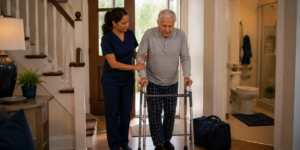
Physical deconditioning from the hospital stay, new medications affecting balance, a home environment that was not assessed for the person’s current condition — these factors combine to make falls significantly more likely in the weeks after discharge than at any other time.
Infections That Are Caught Too Late
Wound infections, urinary tract infections, and early pneumonia are all common in the post-discharge period — and in older adults, they often present subtly. By the time symptoms are obvious enough for a family to act, the infection is already significant.
What Families Can Do to Reduce the Risk
Have Someone With Clinical Training Watching
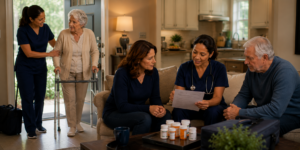
The single most important thing that prevents readmission is consistent nursing oversight during the recovery period. Not a family member doing their best — a trained clinician who knows what early warning signs look like and what to do about them.
Do Not Skip the Follow-Up Appointments
Follow-up appointments with the primary care physician and relevant specialists in the weeks after discharge are not administrative formalities. They are clinical checkpoints that catch problems early. Getting your loved one to every one of them matters.
Know the Warning Signs Specific to Their Condition
Every condition that leads to hospitalization has specific early warning signs of deterioration. Families who know what to watch for and act quickly when they see it prevent a significant number of readmissions. Ask the discharging team to walk you through exactly what would warrant a call or an emergency room visit.
How Professional Homecare Specifically Reduces Readmission
Medication Management From Day One
A caregiver providing consistent daily medication reminders, overseen by a nurse reviewing the complete regimen, catches errors before they become emergencies.
Daily Observation by Someone Who Knows the Baseline
A caregiver who is in the home every day and a nurse reviewing that caregiver’s observations consistently is how early changes get caught and escalated before they become crises. This is what the research on readmission prevention points to again and again.
The Recovery Happens at Home — and the Right Support Makes All the Difference
At Consistent Solution Nursing, preventing unnecessary readmissions is one of the most concrete outcomes of what we do. We have helped families through dozens of post-hospitalization recoveries, and we know the difference that consistent clinical oversight makes in those critical first weeks.
If your loved one is coming home from the hospital, call us. We serve Greater Boston and we can put the right support in place quickly — before the first week home becomes a problem.