When families start navigating homecare, they quickly encounter a set of acronyms that are not always explained clearly: CNA, HHA, RN, LPN. These are not interchangeable titles for people who do similar work with slightly different credentials. They represent genuinely different levels of training, different scopes of practice, and different roles in a care team. Understanding who does what helps families ask better questions and make better decisions.
Home Health Aides — The Daily Caregiving Foundation
What HHAs Are Trained to Do
Home Health Aides complete a state-regulated training program covering personal care assistance, safety, infection control, and basic health monitoring. They are trained and authorized to assist with bathing, dressing, grooming, mobility, meal preparation, medication reminders, and light housekeeping.
The Relationship Is the Core of Their Value
The most important thing an HHA provides — beyond the tasks themselves — is consistent, familiar human presence. A good HHA who knows the client’s routine, personality, and preferences provides care that is both safer and more dignified than a technically competent stranger who shows up without context.
What They Are Not Authorized to Do
HHAs observe and report — they do not diagnose, do not make clinical judgments about what they observe, and do not make decisions about clinical care. These things belong to the nurses overseeing the case.
Certified Nursing Assistants — Clinical Training in Personal Care
CNA Training Is More Clinically Comprehensive
CNAs complete a longer, more clinically focused training program than HHAs, with more formal instruction in vital signs, clinical observation, infection control, and care for clients with specific medical conditions. They work under the supervision of licensed nurses.
CNAs Are Particularly Valuable in Complex Cases
For clients with significant medical complexity, behavioral challenges, or conditions like Parkinson’s or late-stage dementia, a CNA’s deeper clinical training makes them a stronger fit than an HHA for the daily care role.
Registered Nurses — The Clinical Leaders
What RNs Bring That Neither CNA Nor HHA Can
A registered nurse has the training to assess, diagnose nursing problems, plan clinical care, and evaluate the outcomes of that care over time. An RN interprets what caregivers observe, builds the care plan, coordinates with physicians, and makes the clinical judgments that guide everything else.
In a Nurse-Led Model, the RN Is the Foundation
When an RN is actively involved in managing a case — not just assessing at intake — the entire care team functions at a higher level. Caregivers have clinical guidance. Families have a clinical contact. Physicians have a clinical partner in the home. This is what nurse-led homecare means.
At CSN, All Three Work Together Under Nursing Leadership
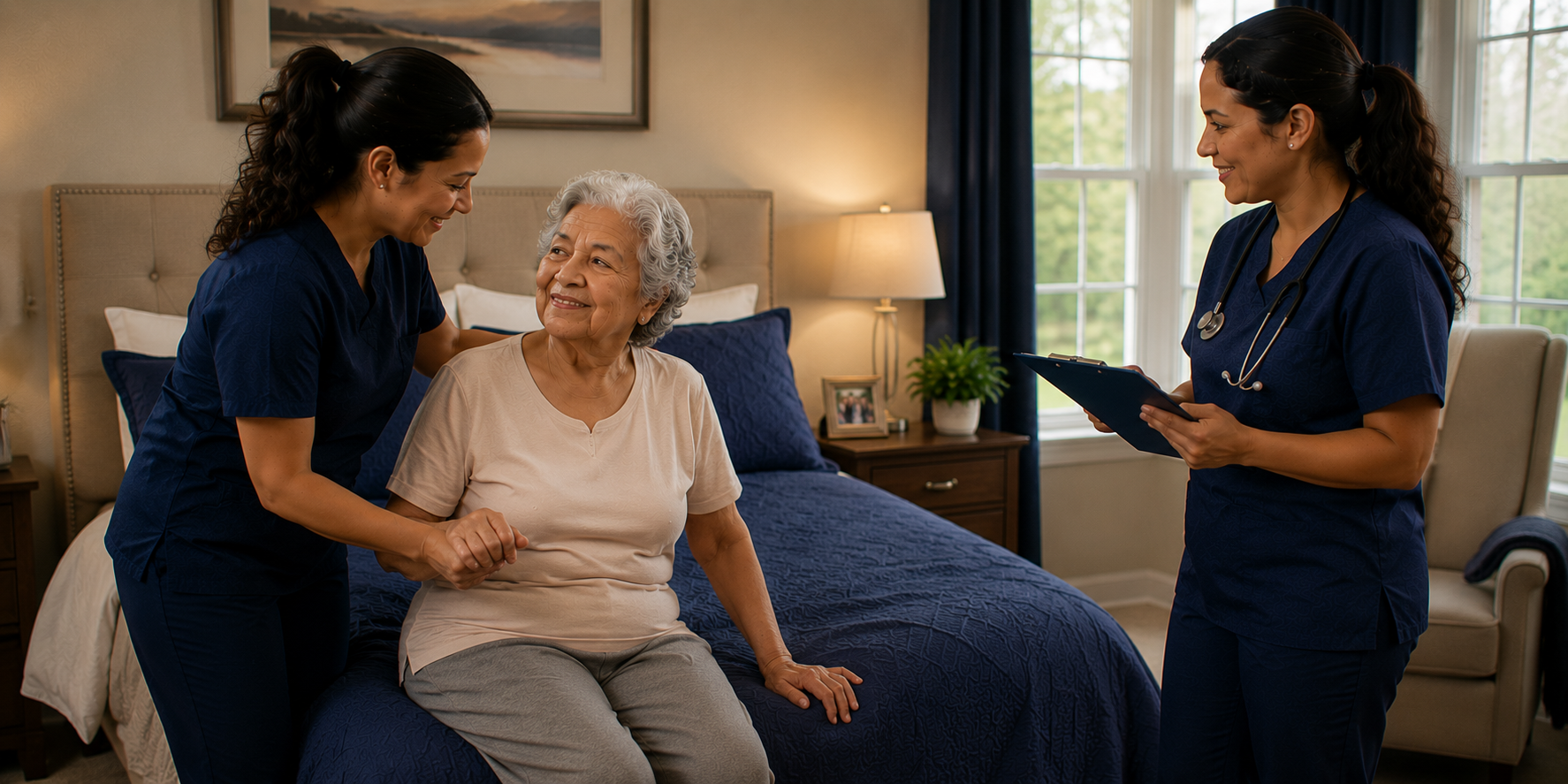
At Consistent Solution Nursing, our HHAs and CNAs provide the consistent daily caregiving. Our RNs provide the clinical oversight, care planning, and physician coordination. These two things work together — and the nursing leadership is what makes the whole model clinically sound.
If you are trying to understand what level of care your loved one needs and who should be providing it, call us. We will give you a straight answer.